
Luxury Handmade Wooden Serving Platters: 2026 Guide

Table of Contents
Last Updated: September 30, 2026
What Sets Luxury Handmade Wooden Serving Platters Apart
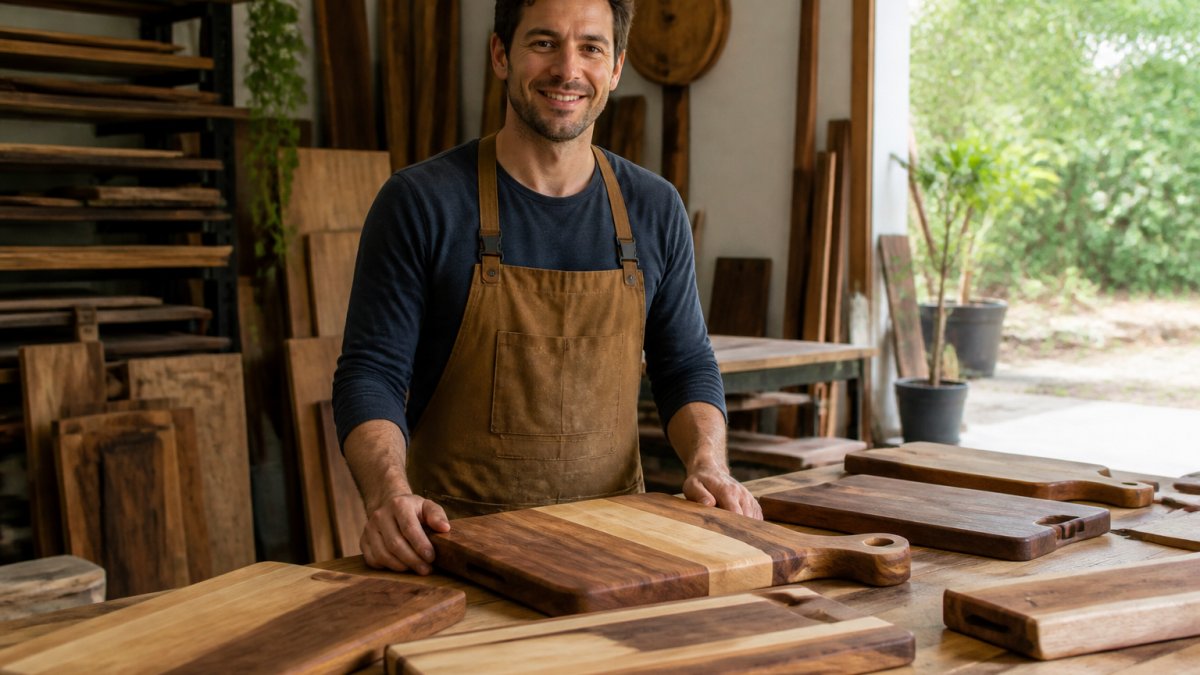
Luxury handmade wooden serving platters are artisan-crafted serving pieces made from solid hardwood, shaped and finished by hand rather than mass-produced on a factory line. The distinction comes down to three things: the maker's technique, the wood itself, and the finish that protects it. At Unhinged Woodworks, we build every piece from hand-selected hardwoods, which is why no two boards leave the shop looking alike.
Mass-produced boards are cut to a template. A handmade platter starts with a single slab, and the maker reads the grain before deciding on shape, thickness, and edge profile. That's the difference you notice the moment you pick one up.
Handcrafted Artisanship and Techniques
Handcrafted artisanship refers to the shaping, sanding, and finishing work done by hand rather than by automated machinery. Each stage matters, but sanding is where most makers cut corners. A properly finished board moves through progressively finer grits until the surface feels satin-smooth, not just smooth.
A common mistake is rushing this stage. Boards that skip grits feel fine when dry but turn fuzzy the first time they get wet. You can spot it by running a damp cloth across the surface: if the grain lifts, the sanding was incomplete. Carved details, rounded corners, and beveled edges are all done by hand for the same reason. They follow the wood, not a jig.
Unique Grain Patterns and Textures
Natural grain is the fingerprint of a wooden serving platter, and no two slabs share the same pattern. Black walnut tends toward chocolate-brown swirls and occasional lighter streaks. Cherry darkens with age, shifting from a warm honey tone to a deep amber over years of use. African mahogany brings a straighter, more uniform grain with a reddish cast.
Grain matching is the step buyers rarely think about but always notice. When a maker pairs boards from the same log, the set reads as a collection rather than two unrelated pieces. That's deliberate work, and it's one of the clearest signals of a hand-finished board.
Wood Species Comparison: Black Walnut, Cherry, and African Mahogany
Wood species is the single biggest variable in how a luxury serving platter performs, ages, and looks on the table. The three hardwoods we build with most often, black walnut, cherry, and African mahogany, sit in different places on the hardness and porosity scales, and those differences drive everything from knife resistance to how the board takes an oil finish.
On the Janka hardness scale, which measures the force required to embed a steel ball into the wood, black walnut, cherry, and African mahogany all work as serving surfaces. A denser wood resists denting and scoring longer, which is why walnut is often chosen for boards that see heavy charcuterie and cheese work.
Porosity is the other half of the story. Open-grained woods absorb oil and moisture faster, which means they need more frequent conditioning but also develop a deeper patina. Tighter-grained woods like African mahogany hold an edge of engraved detail more cleanly and resist staining from oily foods like aged cheddar and cured salami.
Species | Janka Hardness (approx.) | Color | Grain Character | Best For | Care Notes |
Black Walnut | ~1,000-1,100 lbf | Deep chocolate brown | Swirling, high contrast | Cheese and charcuterie, everyday entertaining | Oil monthly; open grain drinks finish |
Cherry | ~950 lbf | Honey to amber | Smooth, subtle | Heirloom gifting, bread and pastry | Darkens with age; oil every 4-6 weeks |
African Mahogany | ~800-900 lbf | Reddish brown | Straight, uniform | Custom engraving, branded pieces | Holds fine detail; oil every 6-8 weeks |
Food pairing follows the same logic. Pale cheeses, fresh figs, and green herbs read best against a dark walnut surface because of the contrast. Cherry's warmer tone flatters reds, cured meats, and baked goods. Mahogany's reddish cast works well with aged cheeses and darker charcuterie, and its tighter grain keeps engraved logos legible at small sizes.
A note on softer woods: butchers and woodworkers sometimes reach for maple or acacia for cutting surfaces, and both are fine choices, but they behave differently. For a luxury platter where the wood is part of the presentation, walnut, cherry, and mahogany give you the best combination of durability and visual character.
Key Takeaway Choose walnut for everyday entertaining and high-contrast styling, cherry for a gift that will be kept for decades, and mahogany when the piece will carry an engraved name or logo.
Food Safe Wood Finish for Serving Boards: What to Look For
A food safe wood finish for serving boards is a non-toxic oil, wax, or combination that seals the grain without leaving anything harmful behind. The safest finishes are penetrating oils that soak into the wood rather than film-forming coatings that sit on top and eventually flake.
What should you avoid? Anything labeled as a varnish, lacquer, or polyurethane. Those finishes crack along knife lines and trap moisture underneath. Mineral oil, fractionated coconut oil, and beeswax blends are the standard for boards that will actually be used.
The FDA guidance on food contact substances sets the framework for what counts as food-safe in the United States, so any finish or adhesive a maker uses should meet that standard. Ask directly. A maker who can't name their finish in one sentence is a maker who hasn't thought hard about it.
Watch Out Never refinish a serving board with a hardware-store varnish or spray lacquer. These finishes chip into food over time and can't be spot-repaired the way an oil finish can.
How to Style a Charcuterie Board on a Wooden Platter
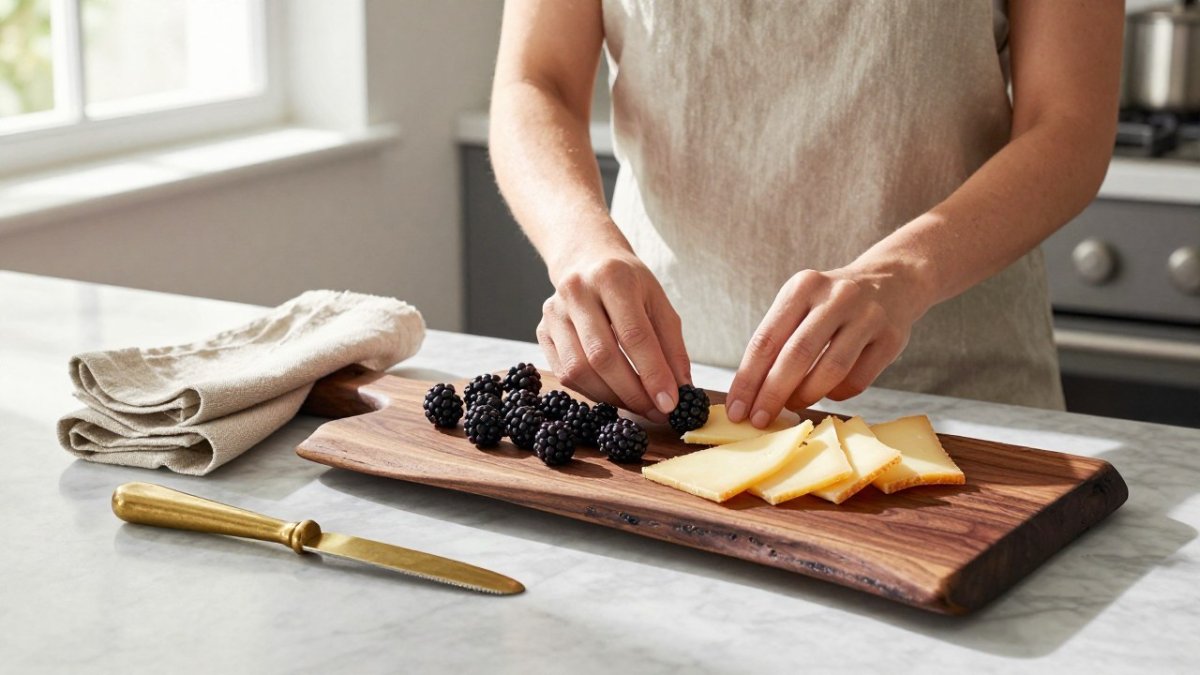
Start with the largest items and work down to the smallest. That single rule solves most layout problems before they happen. Place your cheeses and any whole fruit first, then cured meats, then crackers, then the small accents like olives, nuts, and herbs.

A few layout principles that consistently work:
Anchor with odd numbers. Three cheeses, five meat roses, seven clusters. Odd counts read as intentional.
Vary height. Stack a few items, lay others flat. Flat boards look like a grocery run; layered boards look styled.
Leave breathing room. A board packed edge to edge is harder to serve from and harder to look at.
Follow the grain. Arrange longer items like salami and breadsticks parallel to the wood's natural grain lines.
The board itself is a styling element. A dark walnut surface makes pale cheeses and green herbs pop. A lighter cherry board flatters reds and cured meats.
How to Clean Wooden Serving Platters and Maintain Their Finish
Wash wooden serving platters by hand with warm water and a mild dish soap, then dry immediately with a towel. Never soak them, never put them in a dishwasher, and never leave them wet on the counter. Wood absorbs water, and absorbed water is what causes cracking and warping.
Scrape off food residue with a soft spatula.
Wash with warm water and a drop of mild soap.
Rinse quickly and pat dry.
Stand the board on edge so air reaches both faces.
Re-oil once the surface looks dry or chalky.
Pro Tip Store boards on edge, not flat. A board left flat on a counter traps moisture on the underside and is one of the most common causes of a warp that shows up months later.
Customization and Personalization: Engraving, Branding, and Heirloom Gifting
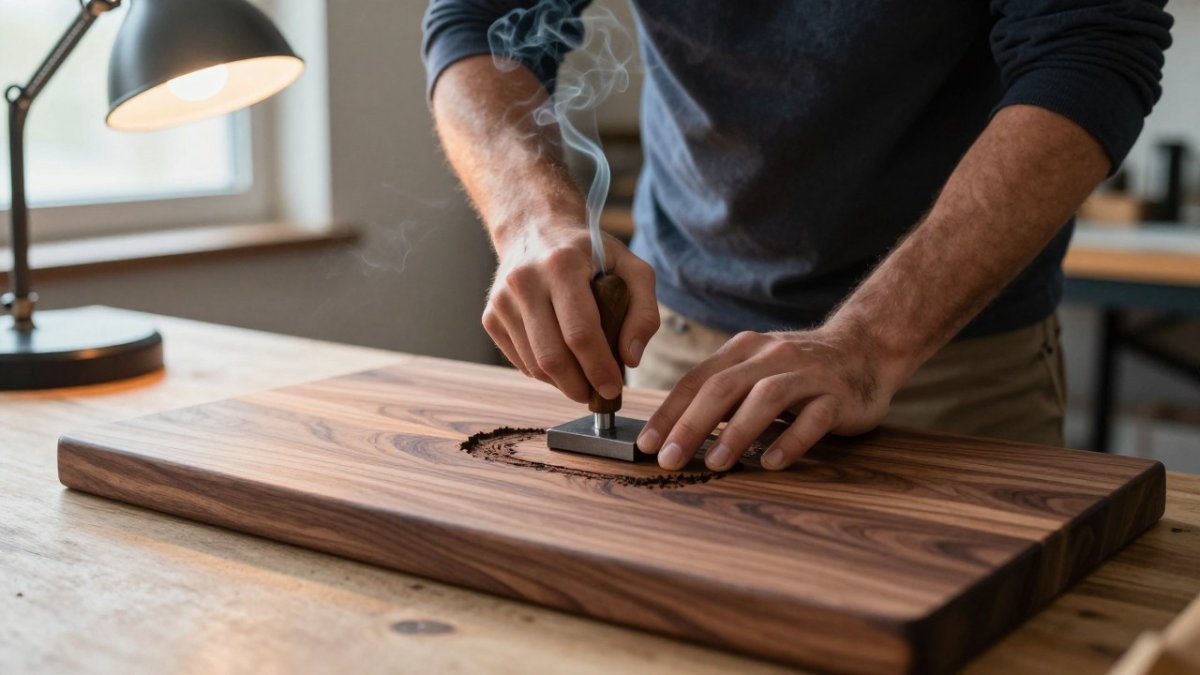
Custom engraving turns a serving platter into a gift that outlasts the occasion. Names, dates, monograms, and short phrases all work well, but the quality of the result depends on three things most buyers never think to ask about: engraving depth, artwork preparation, and wood selection.
Three things to plan for:
Lead time. Custom work takes longer than stock pieces, so order well ahead of a wedding or anniversary date. Rush timelines usually mean a simpler design.
Artwork quality. A clean vector file engraves sharply; a low-resolution image will look soft. Budget time for vectorization if you only have a raster file.
Placement. Center engraving suits gifting. Corner engraving leaves more usable surface for serving and is the better choice for boards that will see heavy use.
Pro Tip If you are ordering a personalized board as a gift, ask the maker to send a digital proof of the engraving layout before cutting. A five-minute review prevents a permanent mistake in a piece of wood.
Frequently Asked Questions
What wood is best for serving platters?
Hardwoods like black walnut, cherry, and African mahogany are top choices because their tight grain resists moisture and knife marks better than softwoods. Black walnut offers dark, dramatic grain patterns that make a statement on any table. Cherry develops a richer patina over time. African mahogany brings warm reddish tones and exceptional density. Each species is durable enough for decades of regular use when properly finished and maintained with a food-safe conditioner.
How do you maintain a handmade wooden serving platter?
Hand wash with warm water and mild dish soap, then dry immediately with a towel. Never soak it or put it in a dishwasher, as moisture causes warping and cracking. Apply a food-safe board conditioner or mineral oil every four to six weeks, or whenever the wood looks dry. This keeps the surface satin-smooth and prevents stains. For deeper cleaning, rub with coarse salt and a lemon half, then rinse and re-oil.
Are wooden serving platters food safe?
Yes, when finished with food-safe adhesives and conditioners. Avoid mass-produced boards treated with petroleum-based lacquers or varnishes that can chip. Quality handmade wooden serving platters use non-toxic finishes like mineral oil, beeswax, or walnut oil that cure into the wood without leaving a surface film. If you are unsure about a board's finish, ask the maker what they used. Reputable artisans will tell you exactly.
What is the difference between a cutting board and a serving platter?
A cutting board handles knife work: chopping, slicing, and prep. A serving platter is designed for presentation, carrying cheeses, cured meats, fruits, and bread to the table as a centerpiece. Some pieces serve both purposes, but a dedicated serving platter often has a larger surface, decorative edge profiles, and a finish meant to look beautiful on display. Using a serving platter only for presentation extends its life and keeps it looking pristine.
Comments