
Best Wood for Durable Cutting Boards: 2026 Guide

Table of Contents
Last Updated: October 17, 2026
Why Wood Species Decide How Long a Cutting Board Lasts
Every board looks durable in the store. A year later you're staring at a crack down the middle. The difference usually isn't how you treated it, it's the species you bought.
Wood species determine how a cutting board handles moisture, knives, and time. Density and hardness set wear resistance; grain structure and pore size control how fast water moves in and out, driving warping and cracking. At Unhinged Woodworks, we select hardwoods for exactly these traits.
Below, we break down the best wood for durable cutting boards species by species, with the trade-offs most guides skip.
Key Takeaway The best wood for durable cutting boards balances three properties: hardness for wear resistance, closed grain for moisture control, and enough give to protect your knife edge. No single species wins on all three.
Hardness and Density: The Measurable Case for Hard Maple
Hard maple is the default answer for a reason: dense, tight-grained, and tougher under daily chopping than almost any domestic hardwood. On the Janka hardness scale, it ranks among the harder North American species used for boards, well above pine or basswood.
Density matters because every knife mark is a tiny reservoir for moisture and bacteria. A harder surface keeps those marks shallow, so the board stays smoother and dries more evenly.
One caveat: hard maple is hard on knife edges. If you use thin Japanese blades, expect more frequent honing. For most home cooks with standard knives, that trade-off is worth it.
Walnut, Teak, Beech, and Cherry: How the Alternatives Compare
Hard maple gets the headlines, but each alternative brings a different balance of hardness, pore structure, oil content, and dimensional stability, differences that show up in how the board wears, how often it needs oil, and how it treats your knives.
Black walnut is the classic looks-versus-wear trade. It is softer than hard maple on the Janka scale, so it dents and scratches more readily under heavy chopping. Best role: serving boards, charcuterie, and light prep.
Teak earns its reputation in wet environments thanks to natural oils and extractives that slow water uptake. That oil content makes it lower maintenance in humid kitchens and less prone to staining. The trade-off: its grain feels slightly more open under a knife than maple's, and its modest silica content is harder on edges over years of heavy use.
Beech is the value workhorse of butcher block: hard enough for daily chopping, closed-grained enough to resist moisture, and widely available in edge-grain construction at lower prices than maple or walnut. It is less dimensionally stable than maple, so thick beech boards can cup or warp if dried flat, and its pale color shows stains and knife marks more than darker species.
Cherry is the softest of this group and the most visually rewarding. It takes oil readily, darkens with age, and feels gentle on knife edges, making it a favorite for serving and light prep.
A practical way to think about it: hardness predicts wear resistance, pore structure predicts moisture behavior, and oil content predicts maintenance frequency. No alternative beats hard maple on raw durability, but walnut, teak, beech, and cherry each win on a different axis. Choose the axis that matches your heaviest use, not your lightest.
Species | Relative Hardness | Moisture Resistance | Knife-Friendliness | Maintenance Load | Best For |
Hard maple | High | Good (closed grain) | Moderate | Moderate | Daily chopping |
Black walnut | Medium | Good (closed grain) | High | Moderate | Serving and light prep |
Teak | Medium-high | High (natural oils) | Moderate | Low | Humid kitchens, low care |
Beech | Medium-high | Moderate | Moderate | Moderate | Butcher block value |
Cherry | Medium-low | Moderate | High | Moderate | Display and light use |
Pro Tip If you are choosing between two species, pick the harder one for the board that takes daily knife work and the softer, prettier one for the board that mostly holds food. Matching species to use is more reliable than chasing a single "best" wood.
Maple vs. Walnut Cutting Board: Weighing Durability Against Looks
The maple vs. walnut cutting board question comes down to one honest trade-off: maple wins on wear resistance and stain hiding, walnut on knife feel and visual warmth.
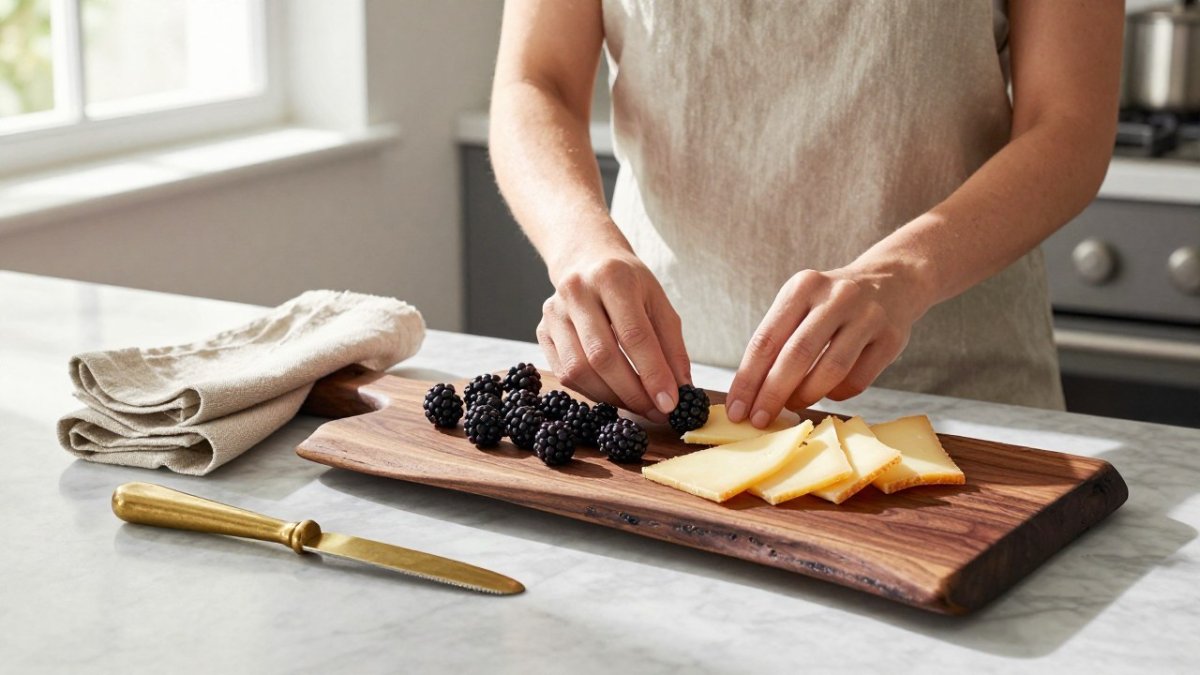
If your board lives on the counter for daily vegetable prep, maple's density keeps the surface flatter longer. If it doubles as a charcuterie centerpiece, walnut's closed grain and rich color make it the more rewarding choice.
What most guides miss: walnut's softer fibers self-heal slightly around shallow cuts, keeping the surface cleaner between oilings. Neither species is "better", they solve different problems.
Pro Tip Buy the species that matches your heaviest use, not your lightest. A walnut board used for daily chopping will show wear faster than a maple board used the same way, no matter how good it looks on day one.
End-Grain vs. Edge-Grain Cutting Board: Construction Changes Everything
Construction matters as much as species: grain orientation changes how the board absorbs impact and moisture.
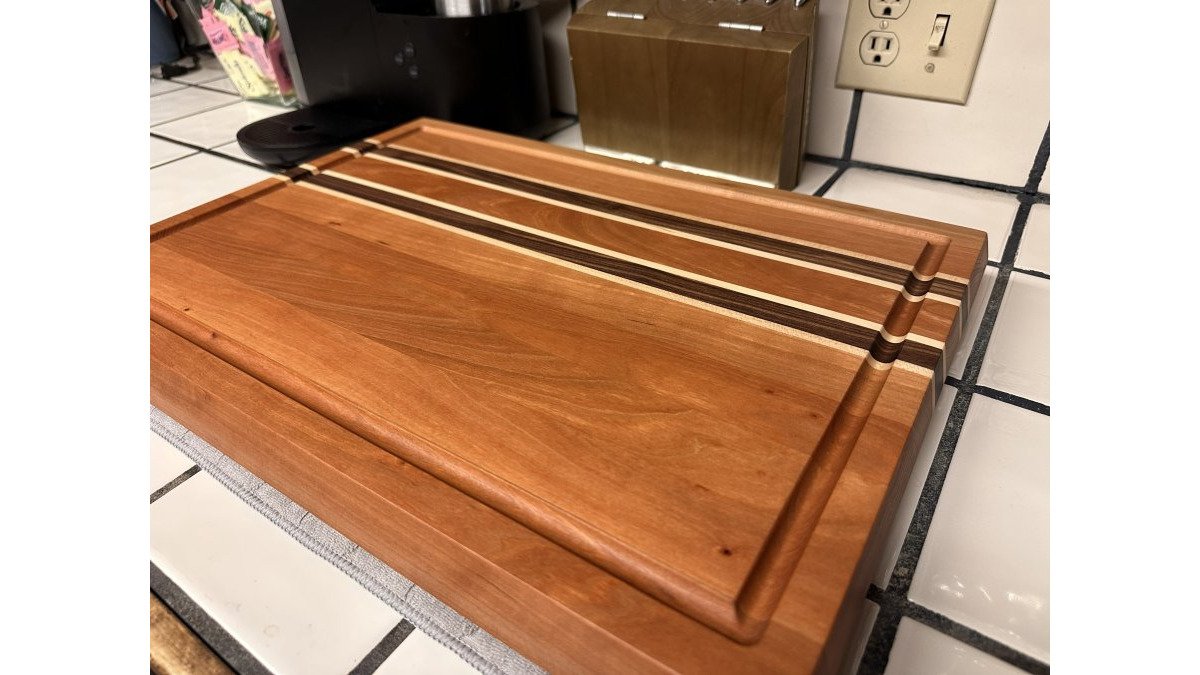
Edge-grain boards are built from strips laid side by side with fibers running lengthwise, easier to produce, more affordable, and stable. Face-grain boards show the flat face of the plank and are the most common style.
End-grain boards stand the fibers on end in a checkerboard pattern. The knife edge slips between fibers rather than slicing across them, protecting both blade and surface, and moisture wicks down into the board rather than across it.

The trade-off is cost and care. End-grain boards take more labor, need more oil, and demand better drying habits. Skip those habits and even premium end grain will crack.
Wood Cutting Board Care and Maintenance by Species
Care advice for wood cutting boards is usually written as if every board were the same. They are not. Oil absorption, pore size, density, and dimensional stability differ by species, changing how often you oil, how carefully you dry, and how long the board lasts before resurfacing or replacement.
The non-negotiables hold across every species:
Wash by hand with mild soap and warm water, then dry immediately.
Never soak wood or put it in the dishwasher.
Dry on edge with airflow on both sides, never flat on a counter.
Oil with a food-safe mineral oil and condition periodically to slow water uptake.
Sand and re-oil when the surface feels rough or dry rather than replacing the board.
Where species diverge is in how much of each step they need.
Hard maple is dense and closed-grained, so it absorbs oil slowly: less frequent oiling is required, but when it dries out it rewards a longer soak.
Black walnut takes oil readily and darkens with each application, which is part of its appeal. Because it is softer and moves more with humidity, it needs more consistent conditioning and careful drying than maple. Repeated sanding removes more material per pass on softer wood, so a walnut board has fewer resurfacing cycles before it thins.
Teak needs the least oil of the group thanks to its natural oils and extractives. Over-oiling is a common mistake: the wood absorbs only so much, and excess oil sits on the surface and attracts dust. A light oiling every two to three months is usually enough.
Beech is moderately absorbent and less dimensionally stable than maple, so drying habits matter more than oiling frequency. Left flat to dry, it is more likely to cup or warp, and flattening removes thickness you cannot get back. Oil every four to six weeks and always dry on edge.
Cherry takes oil readily and darkens with age, which many owners enjoy. As the softest of the group, it shows scratches and dents fastest and benefits from more frequent light conditioning.
Lifetime cost is where species choice really pays off. A board at least 1.5 inches thick can be resurfaced multiple times, spreading the purchase price over decades.
Watch Out The most common and most expensive mistake is letting a board air-dry flat on a counter. Water sits on the underside, one face absorbs more than the other, and the board warps. Warping is often irreversible without removing thickness, so always dry on edge with airflow on both sides.
A simple rule: match oiling frequency to how fast the species dries out, drying discipline to how much it moves, and resurfacing expectations to how hard the wood is. Owners who get decades out of a board adjust their routine to the species in front of them.
Finding the Best Affordable Cutting Board Without Sacrificing Durability
You don't need the most expensive species to get a board that lasts. The best affordable cutting board is usually edge-grain beech or maple, trading some end-grain benefits for a lower price and simpler care.
Three moves protect your budget without cutting durability:
Choose edge grain over end grain for a lower entry point
Pick a thicker board (at least 1.5 inches) so it can be resurfaced later
Buy from a maker who uses kiln-dried hardwood and food-safe finishes, not mystery imports
Thickness is the underrated spec. A thicker board resists warping, stays put on the counter, and can be sanded back to life years down the road. That's how a modest board becomes a decades-long one.
At Unhinged Woodworks, we build with hand-selected hardwoods and food-safe adhesives and conditioners.
Woods to Avoid and How to Match Species to Your Kitchen
Some woods don't belong under a knife. Avoid softwoods like pine and cedar, which dent easily and absorb moisture. Skip open-pored species like oak, where large pores trap water and food particles. And steer clear of any board with unknown or unlabeled wood, since you can't verify food safety or finish.
Matching species to use case is the real decision:
Daily chopping: hard maple, edge or end grain
Serving and charcuterie: black walnut or cherry
Humid kitchens or low-maintenance households: teak
Budget butcher block: beech
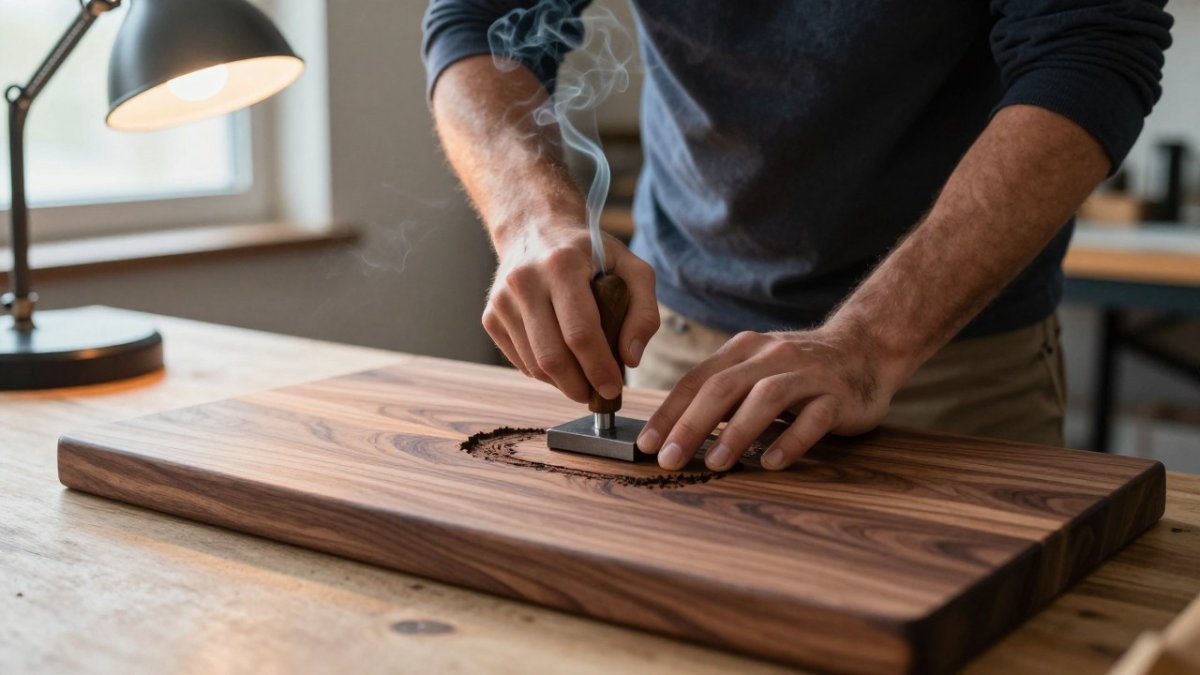
For a board that doubles as a centerpiece, a species with closed grain and rich color earns its place at the table. Unhinged Woodworks builds custom-engraved serving boards and cutting boards from premium hardwoods like black walnut, cherry, and African mahogany, finished for a satin-smooth surface that holds up to real use. Our pieces are made to order, so plan ahead if you're buying for a wedding or housewarming.
Frequently Asked Questions
Which wood is most durable for a cutting board?
Hard maple is the most durable common choice for durable cutting boards. Its Janka hardness sits around 1,450 lbf, and its tight, closed grain resists moisture and knife marks better than softer species. Walnut is harder than many people expect but wears faster under daily chopping. Teak holds up well against moisture thanks to its natural oils. For a board that sees heavy daily use, hard maple in end-grain construction gives the longest service life.
Is maple or walnut better for a cutting board?
It depends on how you will use it. Maple wins on hardness and wear resistance, so it suits daily chopping and heavy prep work. Walnut is softer, with a Janka rating near 1,010 lbf, so it shows knife marks sooner and is better reserved for serving, charcuterie, or light slicing. A maple vs. walnut cutting board decision usually comes down to whether you want maximum durability or a darker, more decorative finish.
Does grain direction affect how long a wooden cutting board lasts?
Yes, significantly. End-grain boards orient the wood fibers vertically so the knife edge slips between them, which reduces visible scratches and lets the surface self-heal. Edge-grain and face-grain boards cut across the fibers, so they show wear faster but cost less and stay flatter in dry conditions. End-grain construction takes more labor and material, which is why it costs more, but it typically outlasts edge-grain boards under the same use.
What is the best affordable cutting board?
The best affordable cutting board is usually edge-grain hard maple. Edge-grain construction uses less material and labor than end-grain, so it costs less while still giving you a dense, closed-grain hardwood that resists moisture and knife damage. Beech is another budget-friendly option with decent hardness. Skip very cheap boards made from soft, open-pored woods, since they absorb water, warp, and need replacing within a year or two.
Choosing the right species is the difference between a board you replace and one you pass down. If you want a piece built from hand-selected hardwoods with food-safe finishes and custom engraving, Unhinged Woodworks can craft a cutting board or serving piece made for your kitchen and your table. Explore our collection and start your custom order today.
Comments