
How to Choose Custom Serving Platters for Every Occasion

Last Updated: November 15, 2026
Quick Summary
Choose custom serving platters by starting with the food, then matching shape, material, and size to how you serve. Flat boards suit charcuterie and cheese, bowl-shaped platters hold olives and saucy snacks, and roughly 8 to 10 square inches of board per guest keeps a spread full without crowding.
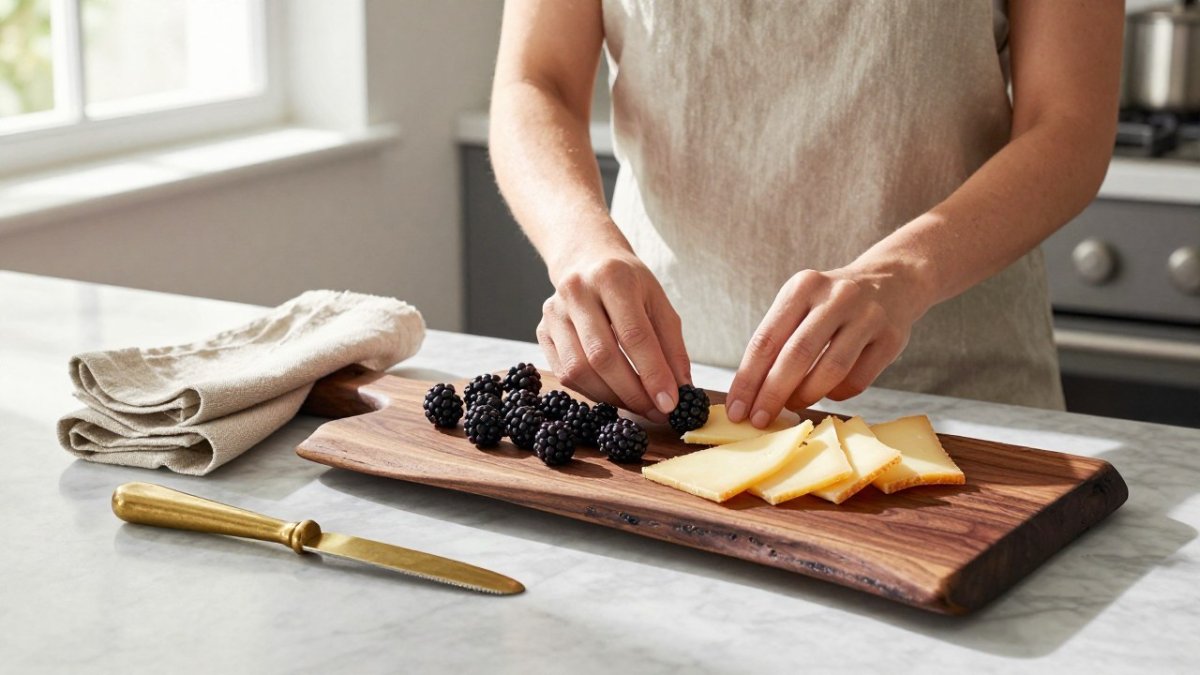
Flat rectangular boards suit charcuterie, cheese flights, sliced bread, and sandwiches.
Hardwood is the heirloom choice but is porous, needs regular conditioning, and should never go in the dishwasher.
A 20-inch by 12-inch board gives about 240 square inches, serving 20 to 24 guests as a primary station.
For a cheese course or dessert platter, 6 to 8 square inches per guest is usually enough.
Keep engraving and printing on the handle, rim, or outer edge, away from the food-contact zone.
Not sure which platter fits your table?
Unhinged Woodworks crafts engraved hardwood serving platters built to last for decades.
Table of Contents
Start With the Food, Not the Platter
The best custom serving platters are chosen backward: decide what you're serving first, then pick the shape, material, and size that make that food look and travel well.
A flat, wide board flatters a spread of hard cheeses, cured meats, and crackers. A shallow, bowl-shaped platter holds olives, spiced nuts, or juicy appetizers without a puddle forming at the edge. When you know how to choose custom serving platters around your menu, every piece earns its place on the table.

Matching Platter Shape to What You Serve
Shape decides how food sits, and how it sits decides how it looks. Use this quick guide:
Flat rectangular boards: charcuterie, cheese flights, sliced bread, sandwiches
Round platters: cheese wheels, tarts, a centerpiece arrangement
Bowl-shaped platters: olives, nuts, dips, messy or saucy snacks
Long paddle boards: large foods like a whole roasted fish, or a grazing spread for a crowd
If you browse our charcuterie boards, you'll notice the shapes repeat for a reason. Each one solves a specific serving problem.
Compare Materials: Wood, Ceramic, Slate, and More
Wood, ceramic, slate, and metal each bring different strengths, and the right pick depends on how you serve and how much care you'll give the piece. The trade-offs below are the ones that actually affect daily use: weight, heat tolerance, stain resistance, dishwasher safety, and how the surface behaves around food.
Material | Best For | Weight | Heat Tolerance | Stain Resistance | Dishwasher Safe | Watch Out For |
Hardwood (walnut, cherry, mahogany) | Charcuterie, everyday serving, heirloom gifts | Light to moderate | Low to moderate; use trivets for hot items | Good when oiled; porous if left dry | No | Never soak; oil regularly; can stain from turmeric and beet juice |
Ceramic, stoneware | Colorful table settings, hot appetizers | Moderate to heavy | High; most handle warm foods well | Excellent with glaze | Often yes; check the maker | Chips if dropped; heavy when loaded |
Slate | Dramatic cheese and appetizer displays | Heavy | Moderate; can crack with sudden temperature change | Good; non-porous surface | Usually no | Heavy; can scratch; not for knife work |
Aluminum | Casual hosting, outdoor events | Light | High | Good | Often yes | Can dent; reacts with acidic foods if uncoated |
Acrylic, melamine | Casual hosting, outdoor events, kids | Light | Low to moderate; keep away from direct heat | Good | Usually yes | Can scratch; less heirloom feel |
For a piece you'll hand down, hardwood is the honest answer. Grain-matched black walnut or cherry, finished with food-safe adhesives and conditioners, develops a patina that only improves with use. Wood is also gentle on knife edges, which matters if you plan to slice cheese or bread on the board. The trade-off is care: wood is porous, so it needs regular conditioning and should never go in the dishwasher.
Ceramic and stoneware win on color, glaze, and heat tolerance. Most stoneware handles a warm appetizer straight from the oven, and glazed surfaces resist staining from tomato sauce and berries. The trade-off is weight and fragility: a loaded ceramic platter can be heavy to carry, and a drop on a tile floor usually ends the piece.
Slate looks dramatic and resists stains well because the surface is non-porous, but it is heavy, can scratch, and is not the right surface for knife work. Sudden temperature changes can crack it, so let a slate platter come to room temperature before serving hot food on it.
Aluminum, acrylic, and melamine are the budget-friendly, tough options for casual outdoor use and kids' tables. They are light and often dishwasher safe, but they scratch, and uncoated aluminum can react with acidic foods like citrus and tomatoes. Melamine should not go in the microwave or under a broiler.
Care and Food Safety by Material
Every serving surface that touches food needs to be food safe, and that starts with the finish. Wood should be conditioned regularly to help protect the grain. Our Graze Craze Board Glaze is made from food-safe ingredients and keeps a wooden platter conditioned between uses. Ceramic and slate simply need a wash and a full dry. Watch out: never submerge a wooden board in water or leave it soaking, because the grain swells and the piece can crack.
For personalization, keep engraving and printing away from the main food-contact zone. Engraved cuts can trap crumbs and oils, so place monograms and names on the handle, the rim, or the outer edge rather than the center of the board. Printed designs should sit on a food-safe finish and be positioned where they will not be scraped by knives or washed aggressively.
Sizing and Portion Planning for Custom Serving Platters
Size is where most hosts guess wrong. A platter that looks generous in a photo can vanish under a real spread, and an oversized board can overwhelm a small table. Plan by guest count and food type, not by how the piece looks online.
A practical starting point is to budget serving surface, not just guest count. For a charcuterie-style spread, most hosts find that roughly 8 to 10 square inches of usable board per guest keeps the arrangement full without crowding, and closer to 12 square inches per guest if the platter is the main food station rather than one of several appetizers.
Translate that into real dimensions. A 20-inch by 12-inch rectangular board gives about 240 square inches of usable surface, which comfortably serves 20 to 24 guests as a primary appetizer station or 30 or more as a secondary platter. A 31.5-inch by 12-inch board like our Premium XL Charcuterie Feast Platter offers roughly 378 square inches, enough for a large gathering of 35 to 45 guests when the board is the centerpiece.
Depth matters as much as length and width. Flat boards work for dry, stackable foods like crackers, sliced bread, and firm cheeses. Shallow bowl-shaped platters hold olives, nuts, and saucy appetizers without a puddle forming at the edge.
Measure your table and your cabinet before you commit. A platter that overhangs the table edge is a tipping hazard, and a board that will not fit in a cabinet or drawer will not get used. Leave at least 2 inches of clearance on each side of the platter for plates, napkins, and glasses.
Watch out: a board that is technically large enough can still feel empty if the food is spread too thin. Cluster the food in groups with small gaps between them so the arrangement reads as abundant rather than sparse, and keep the outer 1 to 2 inches of the board clear as a handling zone.
Personalization Methods: Engraving vs. Printing
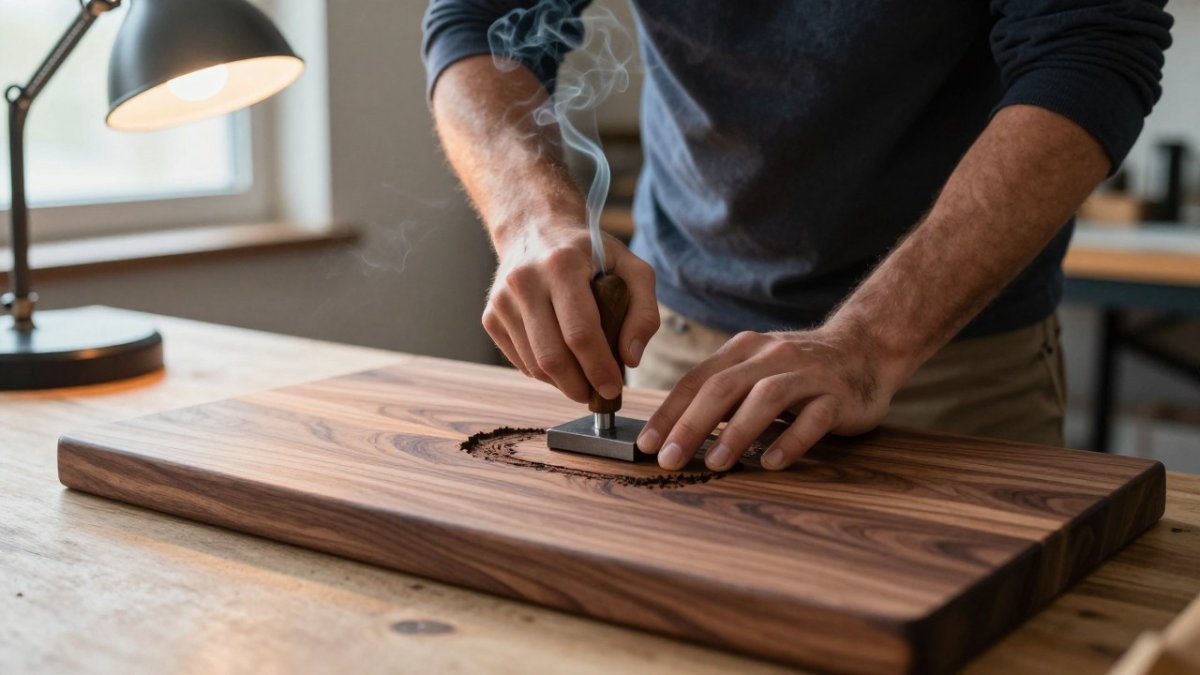
Engraving cuts the design into the wood itself, making it a durable form of personalization.
For an heirloom gift, engraving is the more durable choice. A monogram, a family name, or a short phrase burned into walnut reads as permanent because it is. If you're weighing design options, our guide to custom wood engraving design ideas walks through file prep, wood choices, and finishing so the final piece looks elegant rather than busy.
Engraving pros: permanent, food-safe, ages beautifully. Cons: limited to one tone, needs clean artwork. Printing pros: full color, fine detail. Cons: can wear over time, less heirloom feel.
Choosing a Personalized Serving Tray for a Wedding Gift
A personalized serving tray for a wedding gift works because it's useful and personal at once. Pick a piece the couple will actually use: a board with handles for serving, a size that fits a normal kitchen, and a design built around their names, wedding date, or a shared inside joke.
Engraved hardwood suits this role well. It's the kind of gift that shows up at every anniversary dinner for decades. For more options and ordering tips, see our roundup of personalized wedding gifts for couples. Order early, since custom engraving takes time before a wedding date.
When a Personalized Serving Platter Ceramic Piece Makes Sense
A personalized serving platter ceramic piece makes sense when color and table styling matter more than heirloom durability. Ceramic brings pattern, glaze, and a bright pop to a holiday table.
Choose ceramic if you host colorful themed dinners, want a decorative centerpiece, or need a piece that can handle a warm appetizer. Skip it if you want a gift meant to last generations, or if you serve a lot of knife-work foods, since glaze can scratch. For everyday elegance with real longevity, hardwood still wins.
Monogrammed Serving Tray Ideas and Design Tips
A monogrammed serving tray turns a plain board into something personal, but restraint is what makes it look refined. The best monograms read as designed, not decorated.
Single initial, centered: clean and classic for a couple's last name
Three-letter monogram: traditional, best kept small and centered
Name plus date: ideal for weddings and anniversaries
Short phrase: works when it's witty and brief
Corner placement: keeps the food area clear and looks intentional
Keep the font simple and let the wood grain do the talking. A busy monogram on a busy grain fights itself.
Why Personalized Serving Trays With Handles Earn Their Place
Personalized serving trays with handles earn their place because handles solve the real problem of hosting: carrying a loaded platter from kitchen to table without a spill. A paddle handle or cutout grip gives you control when the board is full and heavy.
Handles also make a piece easier to hang, store, and pass around a crowd. For a host gift, that practicality is what separates a piece that gets used from one that gets admired and shelved.
Choosing custom serving platters comes down to matching food, material, size, and personalization to how you actually host. If you want a piece built to last and made to be used, Unhinged Woodworks offers hand-selected hardwoods, custom engraving and branding, and food-safe finishes on every piece. Start with what you serve, then let the platter follow.
Get started with Unhinged Woodworks and choose a serving piece that turns every gathering into something worth remembering.
Frequently Asked Questions
What is the difference between a serving platter and a serving tray?
A serving platter is usually a flat, rimless or low-rim piece built for presenting food, such as a charcuterie spread or a roasted dish. A serving tray typically has raised edges or handles, which makes it easier to carry drinks, snacks, or multiple small bowls. Many custom serving platters sit somewhere in between, with a shallow bowl shape that holds messy foods without letting them slide off.
Which material is best for a custom serving platter?
It depends on what you serve. Wood, especially hardwoods like black walnut and cherry, is warm, durable, and takes engraving beautifully, which is why it suits personalized serving trays with handles and gift pieces. Ceramic and stoneware handle heat and acidic foods well, slate gives a dramatic look for cheese, and melamine is lightweight for casual use. Check that any finish is food safe before buying.
What size serving platter should I choose?
Match the size to your guest count and the food. A small platter around 10 to 12 inches works for appetizers or a host gift, while 16 to 20 inches or more suits a full charcuterie spread for a party. Consider the depth too: a bowl-shaped platter holds messy or juicy foods, while a flat one is better for sliced meats and crackers. Measure your table and storage space first.
Can wooden serving platters be personalized with engraving?
Yes. Hardwood takes engraving cleanly, and the grain shows through the carved area for a look that reads as elegant rather than tacky. Engraving is a permanent form of personalization. For a monogrammed serving tray or a personalized serving tray for a wedding gift, engraving on a hand-selected hardwood is a durable, heirloom-style choice.
Comments