
Best Wood for Charcuterie and Cutting Boards Explained

Quick Summary
The best wood for a cutting board is a closed-grain hardwood such as hard maple, walnut or cherry, because its tight grain resists knife marks and holds less moisture. For serving boards, decorative woods like cherry, walnut or olive wood work well, since they rarely meet a blade.
Hard maple has a Janka hardness of about 1,450 and suits daily cutting boards.
Black walnut is gentler on knife edges and hides marks better than maple.
Cherry is soft enough to be kind to edges and darkens nicely over time.
Open-grain woods like ash and oak need consistent oiling to stay safe.
Wash and dry boards after every use and never put wood in the dishwasher.
Which board fits your kitchen?
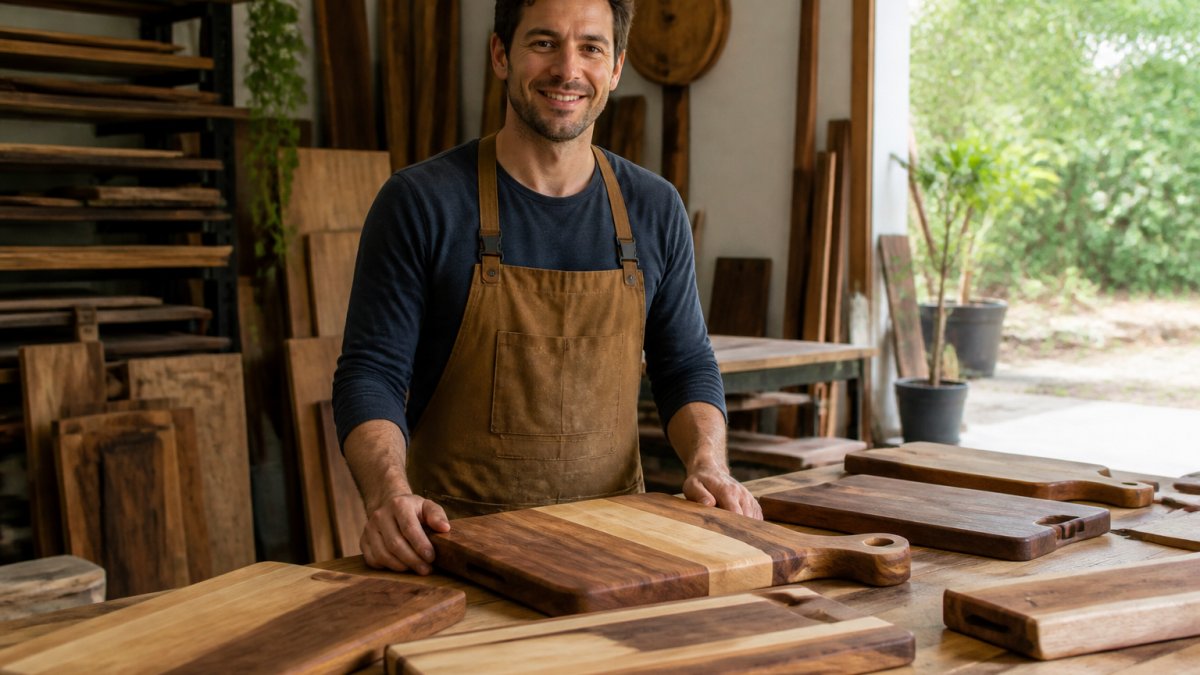
Unhinged Woodworks makes cutting and serving boards from hand-selected hardwoods.
Table of Contents
Serving Boards vs. Cutting Boards: Why the Difference Matters
What Makes a Wood Good for a Board: Hardness, Grain and Porosity
Comparing the Best Hardwoods: Maple, Walnut, Cherry and Beyond
Food Safety: Which Wood Is Best for Antibacterial Performance
Finishes, Glue and Construction: What to Check Before You Buy
Choosing Your Board: Matching Wood to Your Kitchen and Budget
Best Wood for Charcuterie and Cutting Boards Explained
Last Updated: November 12, 2026
Serving Boards vs. Cutting Boards: Why the Difference Matters
Choosing the best wood for a charcuterie board or a cutting board starts with knowing which job the board has to do. The two are not interchangeable. A serving board sits on the table with cheese, cured meats and olives, and it spends its life being admired. A cutting board takes the abuse of a knife, a cleaver and daily washing, and it has to keep food safe while it does.
That difference shapes the wood you should pick. A pure serving board can use a softer, more decorative wood because it rarely meets a blade. A cutting board needs a dense, close-grained hardwood that resists knife marks and hides less bacteria in its surface.
Many shoppers buy a single "charcuterie board" and then chop vegetables on it every night. That works for a while, but the knife marks add up. A simple rule of thumb: if you cut on it, use a board built for cutting, and reserve a decorative piece for serving.
What Makes a Wood Good for a Board: Hardness, Grain and Porosity
Three properties decide how a board performs: hardness, grain structure and porosity. Hardness tells you how well the surface resists dents and knife scoring. Grain structure affects how tightly the fibers close up around a cut. Porosity describes how much liquid the wood soaks up, which drives staining, odor and warping.
Hard maple, walnut and cherry all score well on these measures. Their tight, even grain leaves smaller openings for moisture to enter, so they clean up more easily than open-grained woods.
Edge grain and end grain behave differently too. End-grain boards are kinder to knife edges because the fibers part under the blade, though they cost more to make. Edge-grain boards are sturdier for everyday use and easier to care for.
Comparing the Best Hardwoods: Maple, Walnut, Cherry and Beyond
A useful species comparison has to be measurable, not just descriptive.
Wood | Janka hardness (lbf, approximate) | Grain structure | Weight | Moisture behavior | Knife impact | Maintenance | Relative cost | Best use |
Hard maple | About 1,450 | Closed, even | Heavy | Low uptake; stable when sealed | Moderate edge wear | Low; oil monthly | $$ | Daily cutting boards, butcher blocks |
Black walnut | About 1,010 | Closed, moderate | Medium-heavy | Low uptake; stable | Gentler on edges | Low to moderate | $$$ | Serving and light cutting |
Cherry | About 950 | Closed, fine | Medium | Low uptake; moves slightly with humidity | Gentle on edges | Low | $$ | Serving boards, display pieces |
White oak | About 1,360 | Closed, with visible rays | Heavy | Good water resistance when sealed | Moderate edge wear | Moderate | $$ | Heavy-use cutting boards |
Ash | About 1,320 | Open, pronounced | Medium-heavy | Higher uptake; needs consistent oiling | Moderate edge wear | Moderate to high | $ | Budget cutting boards |
Acacia | Varies widely, roughly 1,100-1,700 | Often open and interlocked | Medium-heavy | Moderate to high uptake; oil regularly | Moderate edge wear | Moderate | $ to $$ | Value serving and cutting boards |
Teak | About 1,070 | Closed, naturally oily | Medium | High natural water resistance | Gentle on edges | Low | $$$ | Serving boards, outdoor-adjacent use |
Olive wood | About 1,200 | Closed, highly figured | Heavy | Low to moderate uptake | Gentle on edges | Low to moderate | $$$$ | Decorative serving pieces |
Bamboo (a grass, not a wood) | High surface hardness | Laminated strips | Medium | Moderate uptake; can delaminate if soaked | Hard on edges | Moderate | $ | Budget boards, light use |
Hard maple is the workhorse for a reason. Its closed, even grain leaves few openings for moisture, it takes a clean edge, and it stays bright with minimal fuss. The trade-off is weight and edge wear: a thick maple board is heavy to lift, and the dense surface dulls knives faster than walnut or cherry. Black walnut is the compromise most makers reach for when a board has to look good and still take light cutting.
White oak deserves a place in the conversation because its closed grain and natural water resistance make it a durable cutting surface, though the open pores that give oak its character need a good finish to stay sealed. Ash is the budget hardwood: hard enough for daily use, but its open grain takes up moisture more readily, so it demands more consistent oiling.

Watch out: Janka ratings describe a species average, not the specific board in your hand. Grain direction, moisture content at milling, and how the piece was dried all change real-world performance, so treat any single number as a guide rather than a guarantee.
Alternative Woods: Is Acacia Wood Good for Cutting Boards?
Acacia is a common alternative, and the answer is yes, with caveats. It is hard and attractive. Its grain can be more open than maple's, so it needs consistent oiling to resist moisture. A well-finished acacia board performs well, but if you want the lowest maintenance, a tight-grained maple will serve you better. Because acacia covers many species and grows quickly, board quality swings widely; check for tight glue lines, a smooth sealed surface, and no visible gaps or knots before you buy.
Teak, Olive Wood and Bamboo Compared
Teak is naturally oily and water resistant, which makes it useful outdoors, though its oils can be less appealing for food-contact work. Olive wood is dense and beautifully figured, a good pick for decorative serving pieces. Bamboo is technically a grass, sold as a budget option; it is very hard on the surface but can splinter and needs care to stay stable. Compare each by how you plan to use the board, not by looks alone. As a rule, reserve teak, olive wood, and highly figured pieces for serving, and put your cutting budget into maple, walnut, or white oak.
Food Safety: Which Wood Is Best for Antibacterial Performance
Wood has a reputation for being naturally antibacterial, and laboratory work on certain species has found that bacteria applied to wood can die off faster than on plastic under some conditions. The practical picture is more useful than the headline, and it is where most guides stop short.
Start with grain. Closed-grain woods such as hard maple, cherry, and walnut have tight fibers that leave fewer openings for moisture and food residue to enter.
Surface condition matters more than species. A board with deep knife grooves, cracks, or dark staining has places where moisture and residue collect and where cleaning cannot reach. Those are the conditions that turn a good species into a risk.
Finish and glue are part of the safety story. Look for food-contact-safe finishes such as mineral oil, beeswax, and food-grade tung oil, and food-safe adhesives in laminated boards. Avoid boards finished with unknown oils or varnishes that can chip.
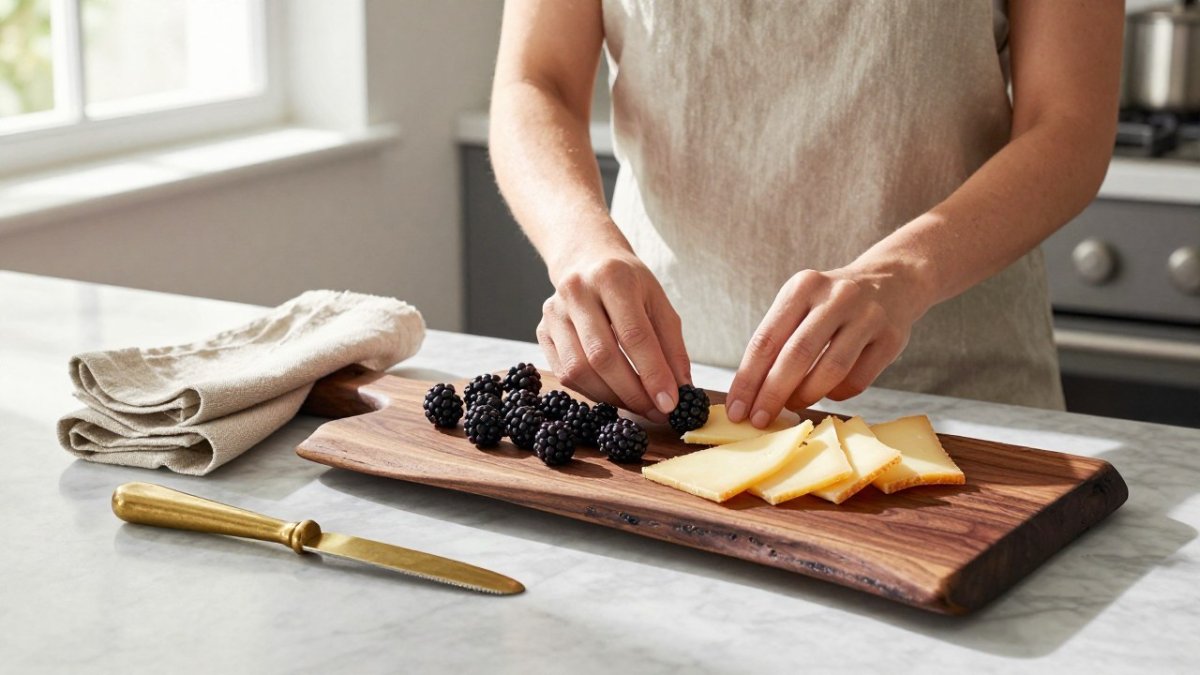
Cleaning guidance differs by use. A serving board that held cheese, cured meat, and fruit needs a wash with hot, soapy water, a thorough dry, and a re-oil when the surface looks dry.
Many customers ask whether one species is antibacterial enough to skip that routine. We don't recommend relying on the wood alone.
Finishes, Glue and Construction: What to Check Before You Buy
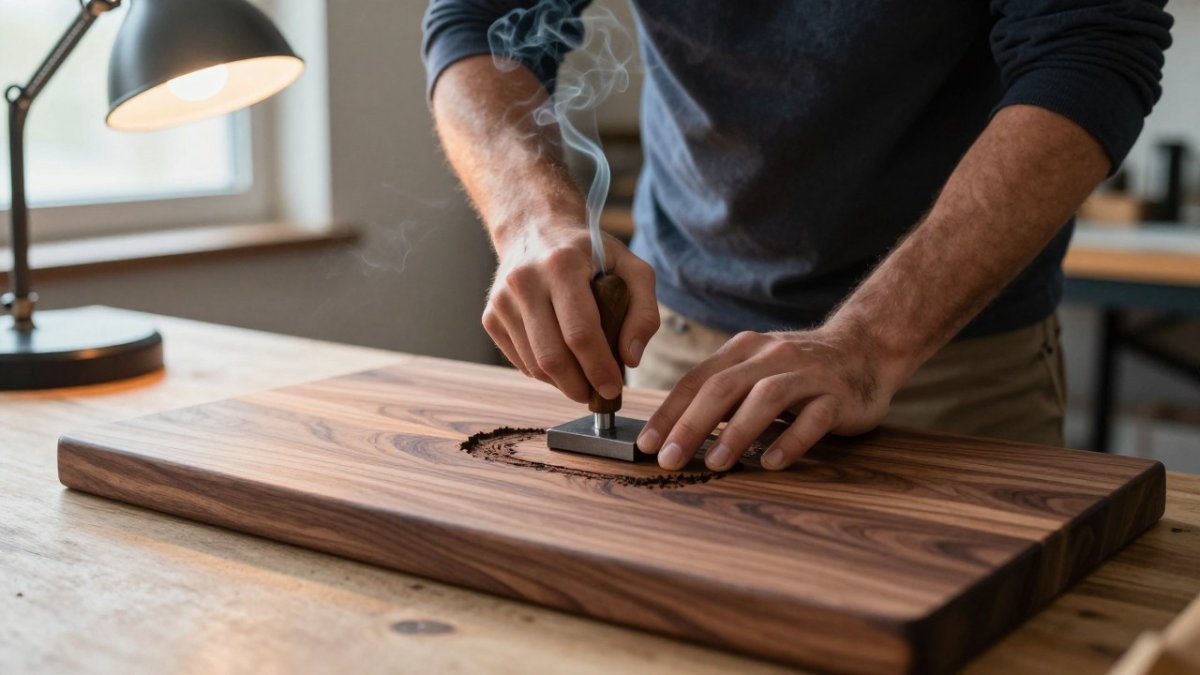
Ask any maker what goes into a board beyond the wood, because the finish and glue matter as much as the species. Look for food-safe adhesives and finishes, and confirm the board is conditioned with a food-safe product. Our boards are finished with food-safe adhesives and conditioners, and a hand-crafted board conditioner is available to keep the surface satin-smooth.
Construction also matters. Laminated boards with tight glue lines hold together better in daily use than thin, poorly joined pieces. Check the thickness, the joints, and whether the piece is stable when you press on a corner. A quality board should feel solid, not hollow.
Choosing Your Board: Matching Wood to Your Kitchen and Budget
Start with how you'll use the board. If you chop daily, choose hard maple or walnut in an edge-grain or end-grain build. If the board is mostly for entertaining, a cherry, walnut or decorative serving piece will show off better. Shoppers on a tighter budget can find good value in acacia, provided they commit to regular oiling.
Think about size and weight too. A large board is impressive on the table but harder to wash and store. A smaller personal charcuterie board is a good match for a single gift or a quiet evening, while a full-size platter suits a dinner party.
If you're ready to compare options, you can browse our cutting boards for everyday kitchen use, or look at our service boards for entertaining. For a smaller piece, our personal charcuterie boards are a good fit. Whatever you choose, keep the board clean, dry and oiled, and it will stay beautiful for years.
Unhinged Woodworks builds boards for both cutting and serving, from hand-selected hardwoods finished with food-safe materials. Explore the range and find the piece that fits how you cook and host. Browse the Unhinged Woodworks store to choose your board.
Frequently Asked Questions
What is the best type of wood to use for a charcuterie board?
Hard maple and walnut are the most common choices for charcuterie boards because both are dense, hold a smooth surface and resist everyday knife marks. Cherry is a good option when you want a warmer color and a slightly softer feel. For a serving board that will rarely touch a knife, any of these woods works well. Choose a board with a tight, closed grain so it is easier to clean and less likely to absorb juices from cheeses, meats and fruit.
Is acacia wood good for cutting boards?
Acacia is a hardwood that holds up well for cutting boards and serving boards, and it is often more affordable than maple or walnut. It is very hard, which means it resists dents, but it can be tougher on knife edges than softer woods. Acacia has an open grain in some pieces, so it benefits from regular oiling with food-safe mineral oil. Check that the board is finished with a food-safe conditioner before use.
What is the most hygienic wood for a cutting board?
Closed-grain hardwoods such as hard maple are generally considered the most hygienic choice because they absorb less liquid and leave fewer places for bacteria to hide. Keeping the board dry, washing it promptly and oiling it regularly matter as much as species. Replace or resurface a board once it develops deep grooves or cracks, since these trap food particles. Avoid soaking the board or running it through a dishwasher.
Is maple or walnut better for a cutting board?
Hard maple is harder and more knife-friendly over the long term, so it is a strong pick for daily chopping. Black walnut is slightly softer, which can mean less blade wear on the knife, and its deep color hides small marks well. Maple suits a busy kitchen, while walnut suits a board you want to show off at the table. Either wood performs well when it is properly conditioned.
Can you use the same wooden board for serving and cutting?
Yes, a well-made hardwood board can do both, but many home cooks keep a separate serving board for cheeses and cured meats. Cutting raw meat and produce on the same surface you use for ready-to-eat food increases the risk of cross-contamination. If you use one board for both jobs, wash and dry it thoroughly between uses and reserve a dedicated board for raw proteins.
How do you care for a wooden charcuterie or cutting board?
Hand wash the board with warm water and mild soap, then dry it right away with a towel. Never soak it or put it in the dishwasher, because prolonged moisture causes warping and cracking. Apply food-safe mineral oil or a board conditioner once a month, or whenever the wood looks dry, and let it absorb overnight before use. Store the board flat or upright so air can circulate.
Comments