
Can Glass Cutting Boards Ruin Your Knife Edges?

Last Updated: October 24, 2026
Quick Summary
Yes, glass cutting boards can ruin knife edges because glass is harder than knife steel, so the edge cannot bite in and instead skids, abrades, rolls, or chips. Many cooks notice a rolled edge within a single heavy prep session on glass, while gradual dulling builds over weeks.
Glass is harder than knife steel, so the blade edge has nowhere to go and force pushes back into the blade.
Plastic is softer than steel, so the edge sinks in slightly and the board cushions part of the cutting force.
Dulling is slow abrasion, rolling bends the edge sideways, and chipping breaks tiny pieces off the edge.
Hone a rolled edge with a rod; sharpen a dull or chipped edge on a whetstone or guided sharpener.
Keep glass for serving cheese, charcuterie, and fruit, and use a soft hardwood board for actual food preparation.
Table of Contents
Do Glass Cutting Boards Dull or Damage Knives?
Yes, glass cutting boards can ruin knife edges. Glass is harder than the steel in most kitchen knives, so every cut drags a razor edge across a surface it cannot bite into. The blade loses its fine edge fast, and the damage shows up as dullness, rolling, or small chips.
This guide from Unhinged Woodworks breaks down exactly what happens to a knife on glass, how it compares with plastic and wood, and how to protect your blades going forward. The short answer is simple. Glass is a serving surface, not a cutting surface.
Below, we'll show you what actually happens at the edge, which board materials treat a knife well, and what to do if you've already been chopping on glass.
Why Hard Surfaces Are Harsh on a Knife Edge
A knife edge is a thin wedge of steel, often sharpened to a fine angle. When it meets a surface harder than the steel, the edge has nowhere to go. It cannot slice into the board, so the force pushes back into the blade.
That pushback causes two problems. First, it wears the edge down through abrasion, slowly grinding away the sharp steel. Second, it can bend or roll the edge sideways. A rolled edge feels dull even though the steel is still there.
Hard surfaces also increase cutting force. You press harder to get through food, and that extra pressure drives the edge into the board with more force. In practice, this means a glass cutting surface works against your knife with every stroke.
The harder the board material, the harsher it is on a knife edge. Glass, stone, and ceramic sit at the top of that hardness scale.
Glass vs Plastic Cutting Boards for Knives
Glass and plastic sit at opposite ends of the knife-friendliness scale, but the reason matters more than the ranking. If you're weighing board options, our guide on whether a professional cutting board is worth it covers the investment question. Glass is harder than knife steel, so the edge cannot bite in.
That single difference in hardness drives almost everything else:
Feature | Glass Board | Plastic Board |
Surface hardness | Harder than knife steel | Softer than knife steel |
What happens at the edge | Edge skids, abrades, rolls, or chips | Edge bites in slightly; force is cushioned |
Typical edge wear | Fast dulling plus rolling and chipping risk | Gradual dulling, mostly from repeated contact |
Sanitizing | Non-porous; wipes clean easily | Non-porous when new, but grooves trap residue |
Lifespan under heavy use | Long surface life, but hard on knives | Develops cuts and grooves; needs replacing |
Best use | Serving, display, light contact | Everyday chopping, especially with softer plastics |
Plastic is not automatically kind to a knife. A hard, heavily loaded plastic board, especially one that has gone slick and grooved, can still dull an edge, and the grooves that build up over months of chopping are where food residue and moisture collect.
Glass wins on hygiene and stain resistance and loses badly on edge retention. That trade-off is the whole story: glass is a cleaning-friendly surface that punishes steel, and plastic is a knife-friendly surface that ages into a hygiene problem.
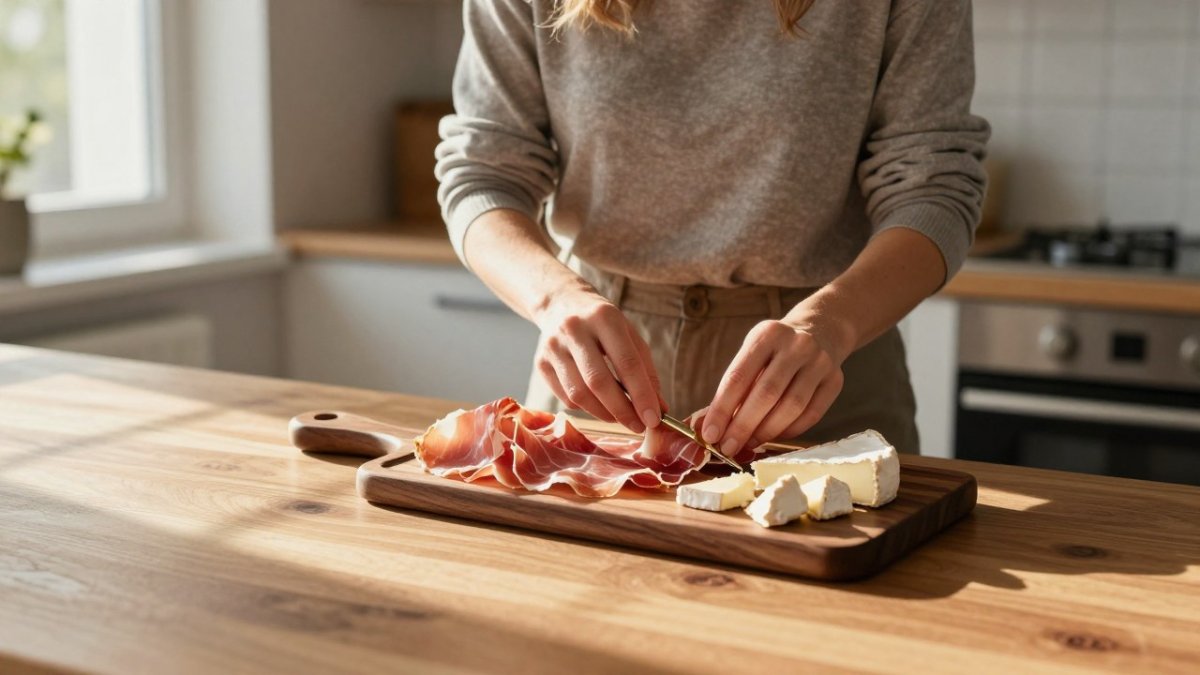
A practical split many cooks settle on is to keep glass for serving cheese, charcuterie, and fruit, foods that need little or no blade pressure, and use a soft board for actual food preparation.
Key Takeaway Neither glass nor plastic is ideal. Glass protects hygiene at the expense of the edge; plastic protects the edge at the expense of long-term cleanliness. Wood sits between them on both counts and is the usual compromise for daily prep.
The Best Cutting Board for Knives: What to Look For
The best cutting board for knives is a wood board with a soft, closed-grain surface that lets the edge bite in slightly instead of fighting back. Wood absorbs the blade's impact, which protects sharpness and reduces edge wear over time.
When you shop, look for these traits:
End-grain or edge-grain hardwood that cushions the blade
Food-safe finishes with no harsh chemicals
Enough thickness to stay stable while you chop
A size that fits your counter and your cooking style
Hardwoods like black walnut, cherry, and maple are popular for good reason. They're dense enough to last but soft enough to be knife-friendly. If you want deeper guidance on wood types and grain, our guide to the best heirloom cutting boards for 2026 compares the options side by side.
Watch out: a board that's too thin will slide and rock, which makes your cuts less safe and less clean.
Edge Dulling vs Rolling vs Chipping: What Actually Happens
Not all edge damage is the same. Glass can cause three distinct problems, and knowing which one you're facing tells you how to fix it.
Dulling is slow abrasion that wears the edge thin. It happens gradually with any hard surface.
Rolling bends the edge to one side. You can often feel a rolled edge catch your fingernail. Honing can realign it.
Chipping breaks tiny pieces off the edge. This is the most serious and needs sharpening to repair.
Edge rolling and chipping are the real risks with glass. The hard surface has no give, so a thin chef's knife edge can fold or fracture on contact. A thicker kitchen knife with a sturdier edge resists this better, but no blade is immune.
How fast does it happen? That depends on your cutting force, knife angle, and how often you chop. Many cooks notice a rolled edge within a single heavy prep session on glass. Others see gradual dulling over weeks. The damage is real either way.
How to Keep Kitchen Knives Sharp After Cutting on Glass
Most of the damage from a glass board is recoverable, but the fix depends on which kind of damage you have. Before you reach for a honing rod, diagnose the edge. Run the pad of your thumb lightly across the edge at a slight angle, never along it, and look down the blade in good light. A rolled edge feels like a smooth wire bent to one side. A chipped edge feels rough or catches in spots.
That check tells you what to do next:
Rolled edge (feels like a bent wire): hone with a rod or ceramic hone at roughly the factory angle, a few light strokes per side. Honing realigns steel; it does not remove much material. If the roll is severe, honing may only partially correct it.
Dull edge (uniformly smooth, no wire): sharpen on a whetstone or a guided sharpener to cut a fresh apex. Honing a genuinely dull edge will not bring it back.
Chipped edge (rough, catches): sharpening is required to grind past the chips. Small chips come out quickly; larger ones may take several passes and will shorten the blade slightly.
Switch boards so the damage does not recur.
Hand wash and dry the knife right after use, especially if it is carbon steel.
Which knives are most vulnerable? Thin, hard, finely sharpened blades, a Japanese-style chef's knife ground to a narrow angle, for example, are the most likely to chip or roll on glass because there is less steel behind the edge to support it. A thicker Western-style knife with a sturdier edge geometry resists better, but no blade is immune to a surface harder than its steel.
A common pattern is that a rolled edge shows up after a single heavy prep session on glass, while gradual dulling accumulates over weeks of lighter use. Neither means the knife is ruined. It means the edge needs maintenance sooner than it would on wood.
Watch Out Do not assume every glass-board session causes permanent damage. A few light cuts on glass may only roll the edge, which honing can correct. Repeated heavy chopping is what drives chipping and shortens the blade's working life.
Regular honing keeps an edge straight between sharpenings, and sharpening removes steel to create a new edge, so save sharpening for when honing no longer helps. The best fix is still prevention: once you move to a wood board and care for it well, it will treat your knives kindly for years. Our guide on how we build heirloom boards explains how to keep a wood surface in shape so it stays gentle on your blades.
Choosing a Knife-Friendly Board for Your Kitchen
Picking the right board comes down to matching the material to how you cook. If you chop daily, a wood board earns its place. If you mostly serve, glass can stay for display.

Here's a simple way to decide:
Daily chopping and prep: choose a hardwood board
Serving cheese and charcuterie: glass is fine for display only
Tight budget, soft surface: a quality plastic board works short-term
Long-term investment: pick a thick, well-finished wood board
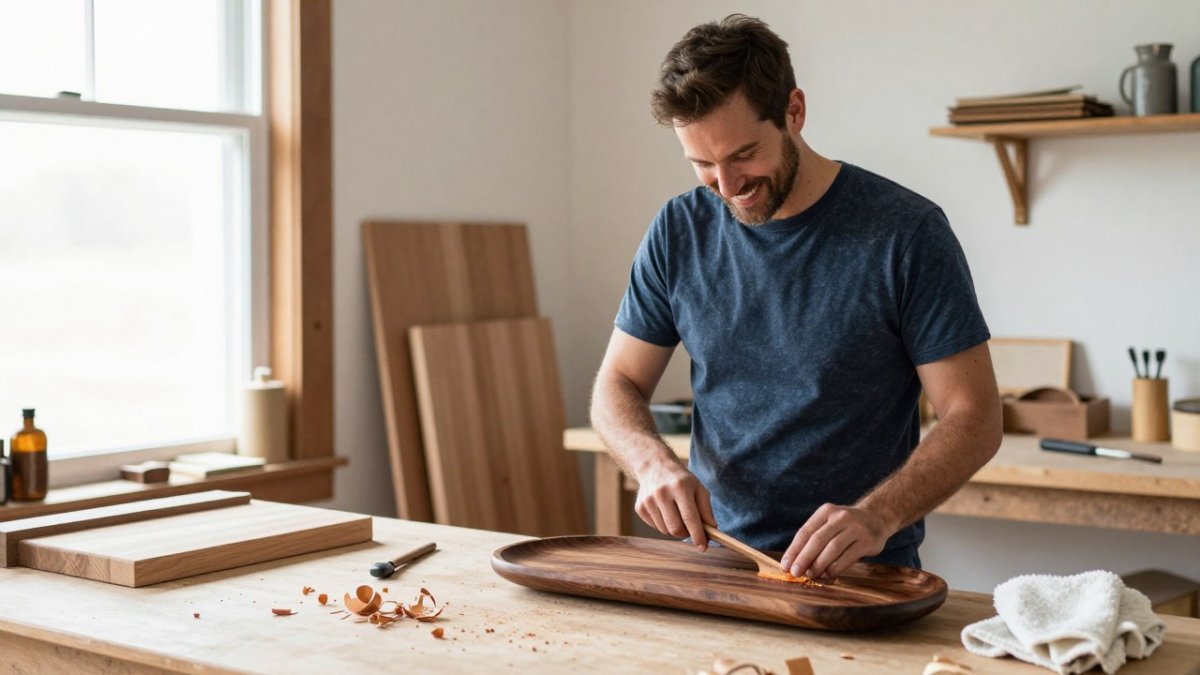
At Unhinged Woodworks, we build boards from hand-selected hardwoods with food-safe finishes, so the surface stays soft on your edges and beautiful on your table. If you want a board that's meant to be cut on every day, our Every Kitchen cutting board is built for exactly that. And if you'd rather browse the full range, explore our handcrafted cutting boards to find the right fit for your kitchen.
Glass has no place under a good knife. The question isn't whether glass cutting boards ruin edges, it's how much wear you're willing to accept. At Unhinged Woodworks, we craft heirloom-quality boards from premium hardwoods, finished with food-safe adhesives and conditioners for a satin-smooth surface that protects your blades. Our boards are built to last for decades, with custom engraving available to make yours personal.
Frequently Asked Questions
Can you use a knife on a glass cutting board?
You can, but it comes at a cost. Glass is one of the hardest cutting surfaces in a kitchen, and a knife edge is far thinner and softer than the board. Every slice drags the edge across that hard surface, which wears it down faster than wood or plastic. If you only cut soft foods like bread or fruit occasionally, damage builds slowly. For daily chopping, a wooden or plastic board treats your blade far better.
Do glass cutting boards dull knives faster than wood?
Yes. Wood gives slightly under the blade, so the edge sinks in rather than skidding across a rigid surface. Glass does not give at all, so the full cutting force lands on the edge. That constant abrasion accelerates dulling and raises the chance of small chips. A wooden board, especially one made from hardwoods like black walnut or cherry, keeps an edge intact much longer with normal use.
What is the best cutting board for knives?
A wooden board is the strongest choice for edge retention. Hardwoods such as black walnut, cherry, and maple have enough give to protect the edge while staying durable. Plastic is a reasonable budget option but wears grooves that trap residue. Avoid glass, stone, ceramic, and metal for any knife work. Whichever board you pick, hand wash it, dry it fully, and oil it regularly to keep the surface smooth.
How do I keep kitchen knives sharp if I already own a glass board?
Reserve the glass board for serving cheese, charcuterie, or fruit rather than chopping. Do your knife work on a wooden board, then hone the blade with a honing steel every few uses to realign a rolled edge. Sharpen properly two to four times a year depending on use. Store knives on a magnetic strip or in a block, never loose in a drawer, and never scrape food off a board with the blade edge.
Get Unhinged Today!@
Add unhingedwoodworks.com as a preferred source on Google →

Comments