
5 Eco Friendly Kitchen Tools for Beginners to Start With

Last Updated: November 5, 2026
Quick Summary
The five eco friendly kitchen tools beginners should start with are wooden spoons and a turner, a hardwood cutting board, a dish brush with a replaceable head, reusable food wrap and cloth covers, and a tea towel and napkin set. These replace plastic wrap, paper towels, sponges, and flimsy utensils, and they last for years with basic care.
Buy three wooden spoons and one turner to start, choosing one-piece construction with no glued joints.
Choose maple, beech, cherry, or black walnut over laminated bamboo for utensils you plan to keep.
Never soak a wooden board or put it in the dishwasher, since water swells the grain and causes cracks.
A beginner set of three beeswax wraps in small, medium, and large covers bowls, produce, and sandwiches.
Keep six to eight napkins and three to four tea towels so a clean one is always ready.
Table of Contents
Start Here: 5 Eco Friendly Kitchen Tools for Beginners
Building a plastic-free kitchen doesn't require a full cabinet overhaul. It starts with five tools that do the most work every day, and this guide from Unhinged Woodworks walks you through each one. These eco friendly kitchen tools are the ones we'd hand to any friend setting up a first sustainable kitchen.
The case for switching is simple. Wood and cloth tools replace items you throw away weekly, and they last for years with basic care. You swap plastic wrap, paper towels, and flimsy utensils for durable pieces that feel better in your hand.
Below, we'll show you exactly what to buy first, what each tool costs you over time, and how to keep it in good shape. Five tools. No overwhelm. Here's what most starter guides get wrong: they list twenty items and leave you paralyzed. We're limiting this to five.
1. Wooden Spoons and a Turner
Start with wooden spoons and a turner, because these handle most cooking tasks without scratching your pans or shedding microplastics. A good set covers stirring, folding, and flipping in one purchase.
Wooden kitchen utensils beat plastic and metal in daily use. Wood won't scratch nonstick surfaces. It stays cool on the handle. And it won't leach anything into hot food.
Buy three spoons and one turner to start. Look for one-piece construction with no glued joints, since those are the first thing to fail.
Stirring spoon for sauces and soups
Slotted spoon for draining
Flat turner for flipping
Solid spoon for serving
A common mistake is buying thin, lightweight wooden tools. They splinter and stain fast. Choose thicker pieces with a smooth, oiled finish.
Which Woods Hold Up Best
Hardwoods last longer than softwoods in the kitchen. Maple, beech, cherry, and black walnut resist moisture and wear better than bamboo strips or cheap pine.
Bamboo is often marketed as eco-friendly, but many bamboo utensils are laminated with adhesives. Solid hardwood is the safer bet for sustainable kitchen utensils you plan to keep.
If you want to verify what you're buying, learn how to identify sustainably sourced hardwood before you commit. And once you've chosen your wood, check what the best food safe finish for wooden boards is so you treat it correctly from day one.
2. A Hardwood Cutting Board
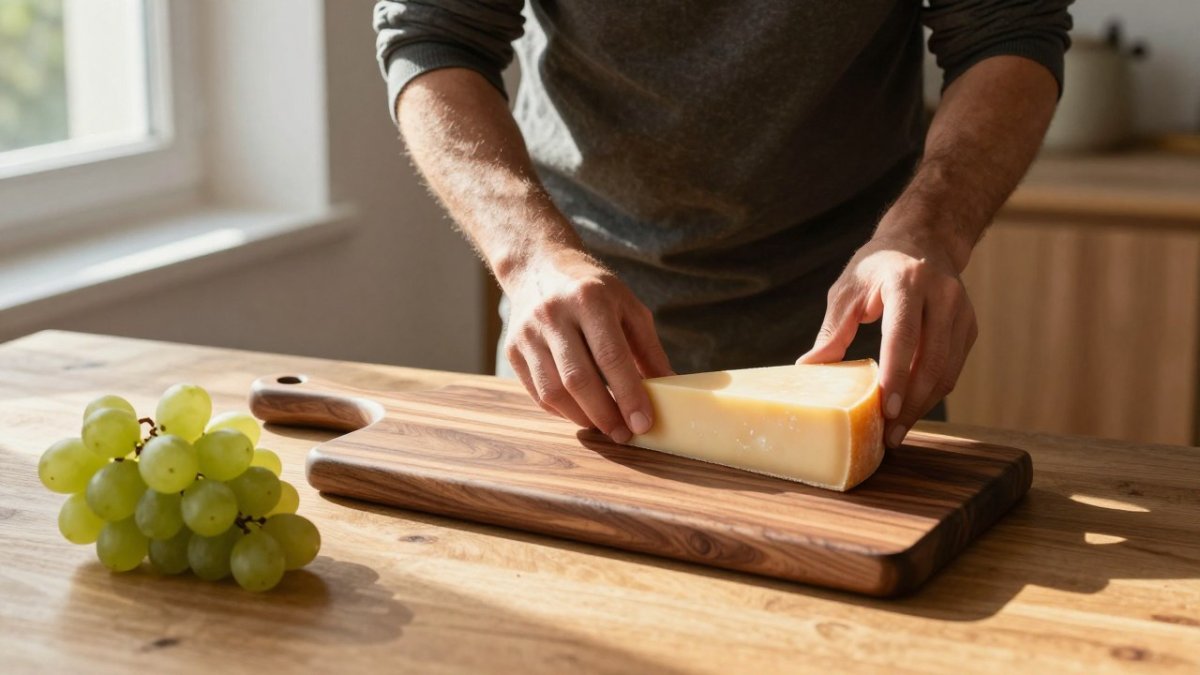
A hardwood cutting board is the workhorse of a plastic-free kitchen. It replaces plastic boards that shed particles into food and warp after a few months.
Choose a board thick enough to stay flat, with end-grain or edge-grain construction. End-grain boards are gentler on knives. Edge-grain boards cost less and hold up well for beginners.

When you're ready to buy, browse our hardwood cutting boards to see the grain patterns and sizes we craft. One good board outlasts a stack of plastic ones.
Watch out: never soak a wooden board or put it in the dishwasher. Water swells the grain and causes cracks that can't be repaired.
3. A Dish Brush with a Replaceable Head
A dish brush with a replaceable head cuts sponge waste to almost nothing. You keep the handle for years and swap only the bristle head when it wears out.
This is one of the simplest eco-friendly kitchen essentials to adopt. Sponges harbor bacteria and get tossed every few weeks. A wooden-handled brush with plant-fiber bristles lasts far longer, and the head replacement keeps plastic out of the trash.
Choose natural fiber bristles over nylon where you can
Pick a handle that fits your grip and reaches tall glasses
Buy one spare head so you're never caught without
4. Reusable Food Wrap and Cloth Covers
Reusable food wrap and cloth covers replace plastic wrap for most everyday jobs, but they are not interchangeable, and beginners get better results by matching the cover to the job.
How beeswax wraps work. The wax blend softens at body temperature, so pressing the wrap around a bowl rim or a half-cut lemon creates a temporary seal. That seal holds best at room temperature and in the refrigerator.
How cloth covers work. Bowl covers with elastic or drawstring edges rely on tension rather than tack.
How silicone lids work. Stretch lids seal smooth, hard rims: mixing bowls, cans, jars, and cut fruit. They handle heat better than wax and can go in the dishwasher on the top rack.
What to buy first. A beginner set of three beeswax wraps in small, medium, and large covers bowls, half-cut produce, and sandwiches. Add two or three cloth covers for proofing and salad. Add silicone lids only if you already store food in cans and hard bowls. Pricing varies by size, material, and brand.
Care and safe use. Wash beeswax wraps in cool water with mild soap, never hot water, and never in the dishwasher; heat strips the wax. Air-dry them flat or draped, not crumpled.
Watch out: beeswax wraps should not touch raw meat or fish, because the wax cannot be sanitized the way a hard surface can. Use a lidded container for raw proteins and reserve wraps for produce, cheese, bread, and cooked leftovers.
Trade-offs to weigh. Beeswax wraps are compostable at end of life but need re-waxing and cannot handle heat. Cloth covers are machine-washable and long-lived but do not seal. Silicone lids are the most heat-tolerant and dishwasher-safe but are not compostable.
5. A Tea Towel and Reusable Napkin Set
A tea towel and reusable napkin set replaces paper towels and paper napkins at the table and the sink. Linen and organic cotton absorb well and get softer with every wash.
This swap saves money fastest. You buy once and wash instead of restocking paper every month. Keep a stack of six to eight napkins and three to four tea towels so you always have a clean one ready.
How These Eco-Friendly Kitchen Essentials Compare in Cost and Lifespan
Cost and lifespan matter more than the sticker price, and most starter guides skip the math. Here is a beginner-level comparison with realistic price ranges and replacement intervals. Figures are typical retail ranges in USD and will vary by brand, size, and wood species.
Tool | Typical Upfront Cost | Realistic Lifespan | Replacement Cost | Best For |
Wooden spoons and turner (set of 4) | $20 to $45 | 5 to 10 years with oiling | Replace individual pieces as they crack | Daily cooking |
Hardwood cutting board | $40 to $120 | 10 to 20 years with care | None if maintained; resurface if deeply scored | Food prep |
Dish brush with replaceable head | $8 to $15 for handle; $4 to $8 per head | Handle 3 to 5 years; head 3 to 6 months | Head only, a few times a year | Dishwashing |
Reusable wrap and cloth covers | $15 to $25 for wraps; $10 to $20 for cloth covers | Wraps about 1 year; cloth covers 3 to 5 years | Re-wax wraps; replace when coating fails | Food storage |
Tea towels and napkins (set of 6 to 8) | $20 to $40 | 3 to 5 years with regular washing | Replace stained or worn pieces | Table and cleanup |
The break-even math. The cutting board is the largest single cost and the longest-lived item, which is why it is worth buying well once.
Where the savings actually come from. The fastest payback is tea towels and napkins, because paper towels are a recurring monthly purchase. Dish brush heads are cheap and infrequent, so the savings are modest but steady. Beeswax wraps save less than people expect unless you wrap a lot of produce and leftovers, because a wrap lasts about a year and needs re-waxing.
What drives lifespan up or down. Hand washing and immediate drying add years to wood. Dishwashing, soaking, and leaving boards standing in water cut lifespan sharply. Oiling spoons and boards monthly keeps the grain sealed. For brushes, letting bristles dry bristle-down extends head life. For wraps, cool-water washing and flat drying prevent the wax from cracking.
When the cheaper option wins. If you cook rarely, a single good wooden spoon and one cutting board may be all you need; buying the full five-tool kit upfront is not necessary. Renters with limited cabinet space should prioritize the cutting board and one brush, then add cloth items as storage allows.
Caring for Sustainable Kitchen Utensils So They Last
Care is what separates a tool that lasts a decade from one that fails in a year. Hand wash wooden items, dry them right away, and oil them regularly.
Here's a simple routine:
Wash wood by hand in warm, soapy water
Dry immediately with a towel, never air-dry standing up
Oil wooden spoons and boards monthly with a food-safe conditioner
Store wood in a dry spot, not against a wet wall
Wash cloth wraps and napkins in cool water, air dry
For boards and spoons, a quality conditioner keeps the grain sealed and the surface smooth. Our Graze Craze Board Glaze is a hand-crafted board conditioner available from our store.
A common mistake is skipping the oiling step. Dry wood absorbs water faster, cracks sooner, and stains more easily.
If you're still deciding whether wood belongs in your kitchen at all, read why artisan wood beats plastic for your kitchen before you buy.
Frequently Asked Questions
Are wooden kitchen utensils more sustainable than plastic ones?
In most cases, yes. Wood is a renewable material that biodegrades at the end of its life, while plastic utensils are petroleum-based and can shed microplastics into food and waterways. A well-conditioned hardwood spoon or board can last decades with basic care, so you replace it far less often. The trade-off is upkeep: wood needs hand washing and periodic oiling, and it should not sit in a sink full of water.
How do I care for wooden kitchen tools so they don't crack?
Hand wash in warm water with mild soap, rinse, and dry immediately with a towel rather than letting it air dry on a rack. Never put wood in a dishwasher or soak it. Every few weeks, or whenever the surface looks dry and pale, rub in a food-safe board conditioner or mineral oil and let it absorb overnight. Avoid olive oil and other cooking oils, which can turn rancid. Store boards upright so air circulates around both faces.
What materials should I look for in sustainable kitchen tools?
Look for bamboo, hardwoods like walnut, cherry, and maple, stainless steel, cast iron, organic cotton, linen, and silicone where flexibility matters. Coconut fibre works well for scrub brushes. Check that wood finishes are food-safe and that any plastic you do buy is BPA-free and built to last. Skip tools with thin coatings or glued-together composites that fail within a year, since frequent replacement cancels out the environmental benefit.
What are easy plastic-free swaps for a beginner's kitchen?
Start with the items you throw away most: paper towels become a set of Swedish dish cloths or cotton tea towels, plastic wrap becomes beeswax or silicone food wrap, and plastic scrubbers become a dish brush with a replaceable head. Swap plastic spatulas for wooden or stainless steel, and move leftovers into glass containers. Five swaps cover most of the waste in a typical kitchen, and each one is a straight replacement rather than a new habit.
Five tools is enough to start. Pick one this week, use it daily, and add the next when it feels natural. At Unhinged Woodworks, we craft hand-selected hardwood boards and serving pieces with custom engraving, food-safe finishes, and grain matching that turns everyday prep into something you're proud to set out. Get started with Unhinged Woodworks and build a kitchen you'll keep for decades.


Comments