
5 Best Cheeses for a Charcuterie Board in 2026

Quick Summary
The five best cheeses for a charcuterie board are aged cheddar, manchego, brie, goat cheese log, and blue cheese. Together they cover hard, semi-firm, soft, fresh, and blue textures, giving guests a range of flavors on one board.
Include at least one soft, one semi-firm, and one hard cheese for texture contrast.
Plan roughly 2 to 3 ounces of cheese per guest for an appetizer spread.
Let brie sit out 30 to 60 minutes so its flavor opens up before serving.
Buy a whole wheel of brie rather than a pre-cut wedge, which dries out.
Use blue cheese sparingly, since a little goes a long way.
Table of Contents
Why Cheese Choice Makes or Breaks a Charcuterie Board
Last Updated: November 9, 2026
Choosing the right cheese is the fastest way to make a charcuterie board feel thoughtful instead of random. If you want a ready-made option, you can browse personal charcuterie board sets sized for individual servings.
The goal is contrast. You want a mix of textures, flavors, and levels of strength so each bite feels different from the last. A sharp aged cheddar next to a creamy brie gives guests two clear experiences on one board.
Here is what matters most when you pick cheeses:
Texture: Include at least one soft, one semi-firm, and one hard cheese.
Flavor strength: Pair mild cheeses with bold ones so no single bite overwhelms the rest.
Milk type: Cow, goat, and sheep milk each taste distinct, which adds variety.
Quantity: Plan roughly 2 to 3 ounces of cheese per guest for an appetizer spread.
Most hosts stop at three or four cheeses. Five gives you a fuller board and more to talk about.
Soft vs. Hard Cheese: How to Balance Your Board
Soft cheeses are creamy, mild, and easy to spread. Hard cheeses are firmer, often aged, and bring sharper, nuttier flavors. A balanced board uses both, usually in roughly equal amounts.
Soft cheeses like brie spoil faster and sweat at room temperature, so place them where they will not sit in direct sun or near a warm dish.
Watch out: Do not put all the soft cheeses on one side of the board and all the hard ones on the other. Guests will reach for the easy option first, and the spread will look lopsided.
The 5 Best Cheeses for a Charcuterie Board in 2026
These five cheeses work well on almost any board because each one occupies a different point on the texture and flavor spectrum. Together they cover soft, semi-firm, hard, fresh, and blue, the full range a board needs. For each cheese below, the aging window and milk type matter as much as the name, because those two variables drive how the cheese behaves at room temperature and what it pairs with.
Schnucks
1. Aged Cheddar
Aged cheddar is sharp, crumbly, and reliable. Cut thick wedges or break off irregular chunks so guests can grab a piece.
Milk type: Cow
Texture: Hard, crumbly
Best for: Crowd-pleasing boards with mixed tastes
Pairs well with: Apple slices, honey, and dark crackers
Substitute: Aged Gouda if you want a sweeter, nuttier hard cheese
2. Manchego
Manchego is a sheep's milk cheese from the La Mancha region with a firm texture and nutty, slightly tangy flavor. The rind is distinctive, a zigzag basket-weave pattern from the esparto grass molds used during pressing. Manchego is graded by age: curado (cured, around 3 to 6 months) is firm and mild, while viejo (aged, 12 months or more) is drier, sharper, and more crumbly. For a board, curado is the safer pick because it slices cleanly and appeals to a wide range of guests.
Milk type: Sheep
Texture: Semi-firm to firm
Best for: Adding a distinctive, sophisticated note
Pairs well with: Quince paste, Marcona almonds, and cured Spanish meats
Substitute: Aged Pecorino Romano for a sharper, saltier sheep's milk option
3. Brie
Brie is soft, buttery, and mild. Its rind is edible, and the interior turns almost spreadable when it is at room temperature. Let it sit out for 30 to 60 minutes before serving so the flavor opens up. Buy a whole wheel rather than a pre-cut wedge when possible, pre-cut brie dries out along the cut face and loses its molten texture. A ripe brie should feel slightly soft to the touch in the center, not runny and not firm.
Milk type: Cow
Texture: Soft-ripened
Best for: A creamy contrast to harder cheeses
Pairs well with: Fig jam, sliced pears, and baguette rounds
Substitute: Camembert for a slightly earthier, stronger soft-ripened cheese
4. Goat Cheese Log
A fresh goat cheese log is tangy, bright, and slightly earthy. It is a good choice for guests who find cow's milk cheeses heavy, because goat milk has smaller fat globules and a different protein profile that many people digest more easily. Roll the log in herbs or cracked pepper for extra color on the board. Fresh goat cheese is at its best within a week of opening, so buy it close to serving day.
Milk type: Goat
Texture: Fresh, spreadable
Best for: A fresh, tangy option that cuts through richer flavors
Pairs well with: Honey, cherry tomatoes, and toasted walnuts
Substitute: Feta for a brinier, crumbly fresh cheese
5. Blue Cheese
Blue cheese is bold and salty, with a strong, creamy bite. Use it in small amounts, since a little goes a long way. Crumble it or cut thin wedges so guests can take just enough.
Milk type: Cow or sheep, depending on variety
Texture: Semi-soft to crumbly
Best for: Adventurous eaters and wine lovers
Pairs well with: Dried apricots, pecans, and a sweet dessert wine
Substitute: Gorgonzola dolce for a creamier, milder blue
Watch out: Do not buy all five cheeses on the same day you plan to serve them. Soft-ripened cheeses like brie need a day or two at room temperature to ripen properly, and hard cheeses slice more cleanly when they have been out of the fridge for at least 30 minutes.
Here is a quick reference for the five cheeses covered above, with their milk type, texture, and best use.
Cheese | Milk type | Texture | Best for |
Aged Cheddar | Cow | Hard, crumbly | Crowd-pleasing boards with mixed tastes |
Manchego | Sheep | Semi-firm to firm | Adding a distinctive, sophisticated note |
Brie | Cow | Soft-ripened | A creamy contrast to harder cheeses |
Goat Cheese Log | Goat | Fresh, spreadable | A fresh, tangy option that cuts through richer flavors |
Blue Cheese | Cow or sheep | Semi-soft to crumbly | Adventurous eaters and wine lovers |
Cheese Pairings for Charcuterie Board Success
Good pairings make each cheese taste better, and the reason is chemistry, not guesswork. For a board built around wine and cheese, a dedicated wine and cheese service board keeps the pairings together in one place. Sweet items like honey, jam, and dried fruit balance salty and sharp cheeses by cutting through fat and acidity. Crunchy items like nuts and crackers add texture contrast. Fresh fruit adds brightness and moisture.
Wine and Cheese Pairing by Varietal
The general rule is that wine and cheese should match in intensity: a delicate cheese gets a delicate wine, and a bold cheese gets a bold wine. Beyond that, the acid in wine cuts through the fat in cheese, and the tannin in red wine binds to protein. That is why a high-tannin red can taste bitter against a soft, creamy cheese but works beautifully against an aged hard cheese.
Aged cheddar: Cabernet Sauvignon or an off-dry Riesling. The tannin in Cabernet stands up to the sharpness, while the Riesling's sweetness balances the salt crystals.
Manchego: Tempranillo or a dry Sherry. The nutty sheep's milk flavor echoes the savory notes in Tempranillo, and Sherry's salinity mirrors the cheese's tang.
Brie: Chardonnay or Champagne. The wine's acidity and bubbles cut through the butterfat without overwhelming the mild flavor.
Fresh goat cheese: Sauvignon Blanc. The wine's herbal, citrusy edge matches the cheese's tang and does not compete with it.
Blue cheese: Port or Sauternes. The sweetness of a dessert wine balances the salt and pungency of blue cheese, this is one of the few pairings where sweet wine beats dry.
Non-Alcoholic and Accompaniment Pairings
If you are not serving wine, the same intensity-matching logic applies to other drinks. A crisp apple cider works like a white wine against brie and goat cheese, while a strong coffee or dark tea can stand up to blue cheese. On the board itself, pair each cheese with one sweet item and one crunchy item so guests can build their own combinations:
Aged cheddar: Honey and dark rye crackers
Manchego: Quince paste and Marcona almonds
Brie: Fig jam and baguette rounds
Goat cheese: Honey and toasted walnuts
Blue cheese: Dried apricots and pecans
Watch out: Do not serve a high-tannin red wine with soft-ripened cheeses like brie. The tannin binds to the cheese's protein and can leave a metallic or bitter taste in the mouth. Stick to whites, sparkling wines, or low-tannin reds like Pinot Noir for soft cheeses.
The best hard cheese for a charcuterie board is usually aged cheddar or manchego. Both hold their shape, slice cleanly, and handle room temperature well. For soft cheese, brie and fresh goat cheese are the most reliable choices.
How to Arrange Cheese on a Charcuterie Board
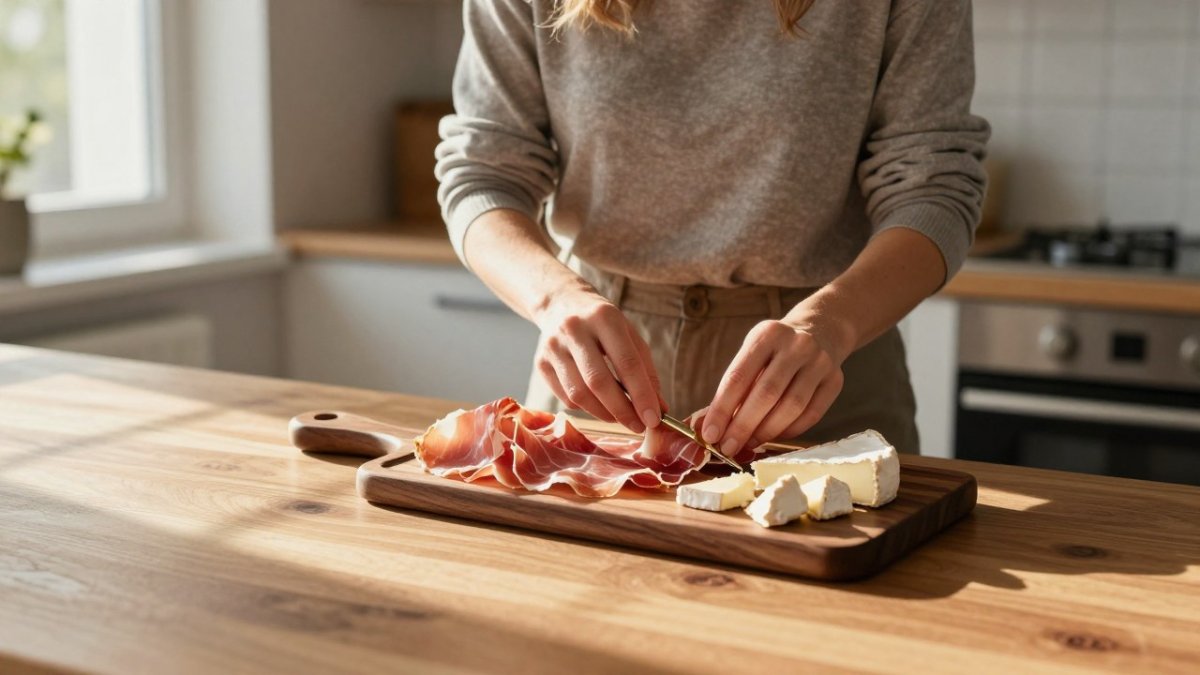
Arrange your cheeses before anything else. Place them first, spaced out across the board, then fill the gaps with meats, fruit, and nuts.

Follow these steps:
Set your largest, most eye-catching cheese on the board first.
Place the remaining cheeses at different points so they are not clustered together.
Put a separate knife beside each cheese so guests do not mix flavors.
Add cured meats in folded or rolled shapes to create height.
Fill small gaps with grapes, berries, nuts, and crackers.
Think about color. Mix light and dark items, and add a green element like herbs or grapes to brighten the board.
Serving Temperatures, Storage, and Leftovers
Serve most cheeses at room temperature for the best flavor. Take them out of the fridge 30 to 60 minutes before guests arrive. Cold cheese tastes muted and feels hard to spread.
Keep the board covered between servings and store unused cheese in wax or parchment paper, not plastic wrap, so it can breathe. Leftover cheese keeps best in the fridge and should be eaten within a few days for soft varieties.
Your wooden board needs care too. You can find a food-safe board butter for wood boards designed to keep your board in good condition.
Planning Your Next Board on a Wooden Serving Piece
A wooden board makes the cheese look its best. For a big gathering, you can see an extra-large curly white oak charcuterie platter built to hold a full spread.
Pricing for custom boards depends on size, wood type, engraving, and quantity, so check the Unhinged Woodworks store or request a quote for current options.
Start with the five cheeses above, arrange them with care, and let the board do the rest. Browse the Unhinged Woodworks store to find the right serving piece for your next gathering.
Frequently Asked Questions
What are the top 5 cheeses for a charcuterie board?
A strong starting lineup includes aged cheddar, Manchego, brie, a fresh goat cheese log, and a blue cheese such as Gorgonzola. Together they cover sharp, nutty, creamy, tangy, and bold flavors, so guests with different tastes each find something they like. Choose a mix of textures and keep portions generous enough that people can build a bite with crackers, fruit, and meat.
What is the most common cheese for a charcuterie board?
Cheddar is the most common choice because most guests recognize it and enjoy it. Aged cheddar holds its shape when sliced, pairs well with apples and cured meats, and works for both casual and formal gatherings. Pairing it with one soft cheese such as brie gives the board contrast without confusing the flow of the platter.
How many cheeses should you put on a charcuterie board?
Three to five cheeses is a practical range for most gatherings. A common guideline is the 3-3-3 rule: three cheeses, three meats, and three accompaniments. Use the number as a starting point and adjust for guest count and how long people will graze. For a small table with a main meal, two cheeses may be enough.
What should you avoid putting on a charcuterie board?
Avoid cheeses that sweat or melt quickly at room temperature, such as very fresh soft cheeses left out for hours, and avoid strongly flavored items that overwhelm the cheese. Skip anything that needs cooking or refrigeration to stay safe, and keep wet dips and sauces in separate small bowls so they do not soak into crackers and bread.


Comments